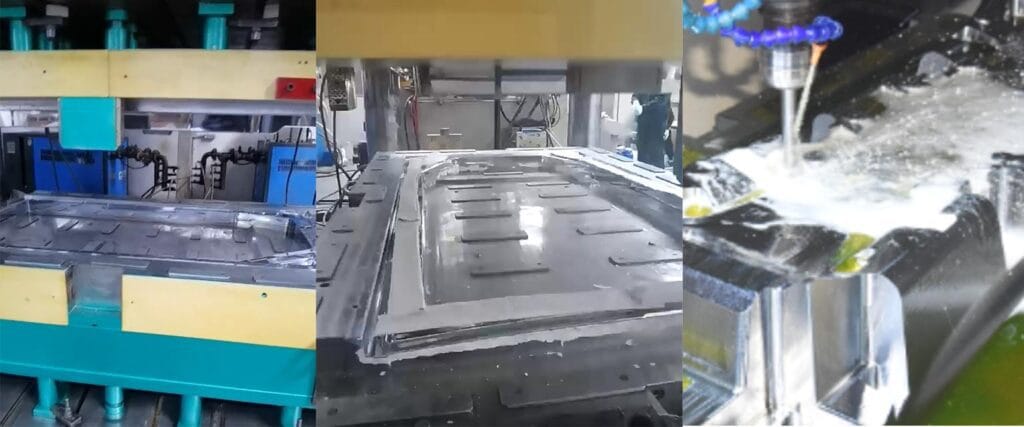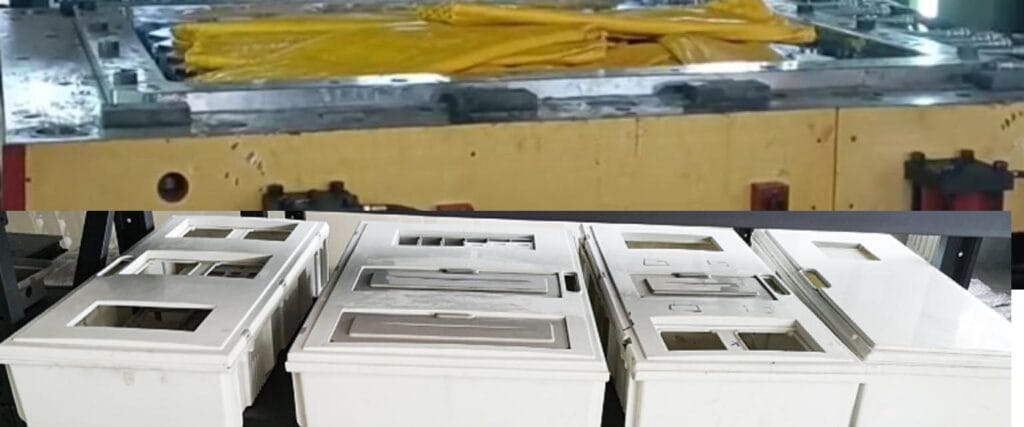
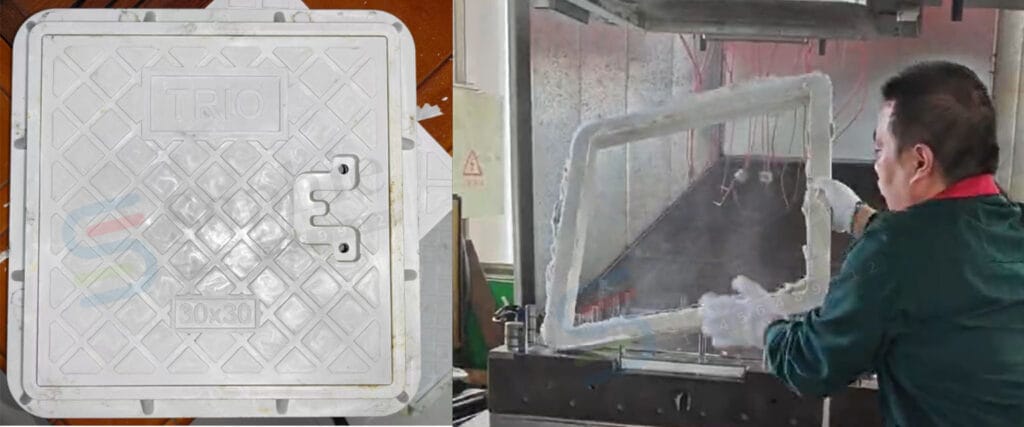
FRP Manhole Cover Mould Manufacturing Service Solution
What Is FRP Manhole Cover Mould?
FRP manhole cover mould manufacturing process
- FRP manhole covers are manufactured using various processes, the most common being:
Compression Molding: A mixture of resin and fiber is placed in a preheated steel mold and compressed under high pressure and temperature. This method produces manhole covers with a dense structure and strong load-bearing capacity. - Hand Lay-up Molding: Glass fiber and resin are manually laid layer by layer onto a mold, suitable for small-batch production.
- Filament Winding: Resin-impregnated glass fiber is wound around a mandrel, and the product is formed after curing.
- Resin Transfer Molding (RTM): Suitable for products with complex shapes and high-performance requirements.
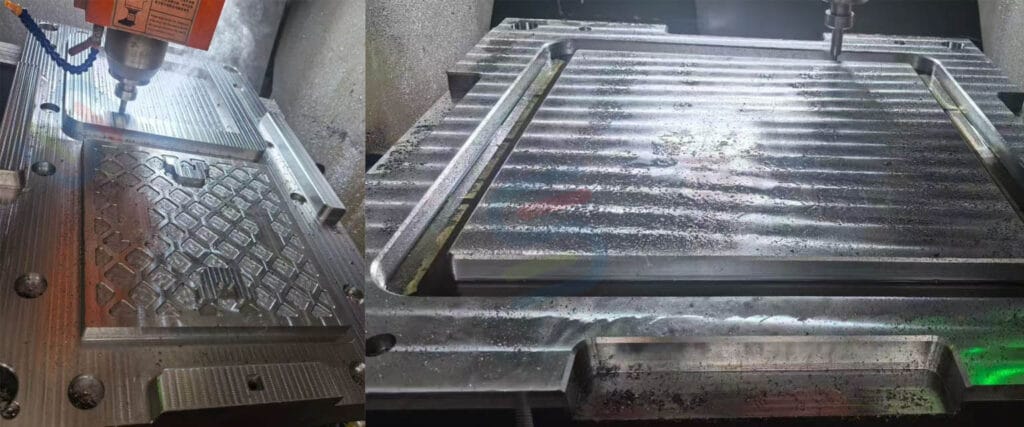
Manhole cover mold manufacturing process control
- Curing Temperature: Precisely control temperature fluctuations using high-precision temperature control equipment to ensure stable curing.
- Pressure Distribution: Optimize mold design to ensure uniform lamination pressure and avoid uneven resin flow.
- Curing Time: Follow the manufacturer’s recommended time and monitor with a timer to ensure full curing.
- Post-Curing Treatment: Precisely control temperature and time, and ensure ambient humidity meets requirements to avoid residual stress leading to deformation.
Key Points of Manhole Cover Mold Design and Manufacturing
- Manhole Cover Mould Structural Design: Reinforce the mold structure to improve strength and rigidity, ensuring it can withstand the temperature and pressure during the curing process.
- Manhole Cover Mould Processing Quality: Optimize mold design to reduce parting surfaces, ensure tight joints, and prevent deformation.
- Manhole Cover Mould Surface Treatment: The mold surface must be free of bubbles, scratches, and repair marks; the number of pinholes must be strictly controlled.
The core advantages of fiberglass manhole cover
1. Lightweight and High-Strength Coexisting
2. Excellent Corrosion Resistance
3. Anti-theft and Environmentally Friendly Features
Common problems and solutions during manhole cover mold production
Uneven surface: Repair the mold, adjust the material quantity, lower the mold temperature, and increase the pressure.
Table of Contents
ToggleDull surface: Adjust the mold temperature, close the mold slowly, and use a suitable release agent.
Uneven surface color: Adjust the mold temperature uniformity, lower the mold temperature, and prevent material aging.
Sticking to the mold: Add an appropriate amount of release agent, improve curing conditions, and preheat to remove moisture.
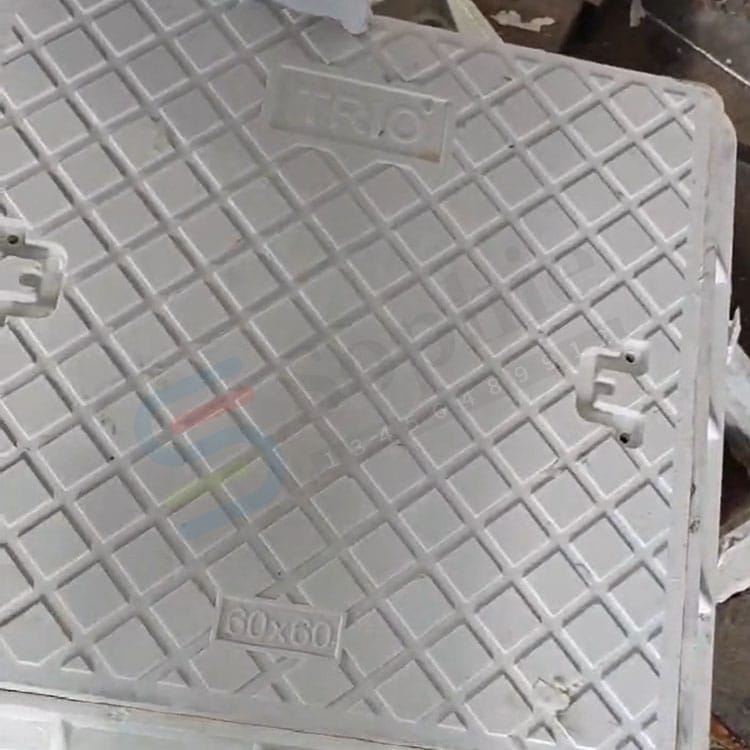
FRP manhole cover application and market prospects
1. Municipal Roads: As the preferred choice for areas with vehicular traffic, FRP manhole covers can withstand the pressure of vehicles weighing over 60 tons. Their self-locking design effectively prevents displacement, ensuring driving safety.
2. Residential Communities: In non-motorized vehicle lanes and sidewalks, lightweight FRP manhole covers meet load-bearing requirements while facilitating property maintenance. Their quiet operation also reduces noise from vehicles driving over them.
3. Industrial Sector: Corrosive environments such as chemical industrial parks and sewage treatment plants are advantageous for FRP manhole covers, as their corrosion resistance reduces maintenance costs.
4. Emerging Markets: With urban renewal and smart city construction, FRP manhole covers are being integrated with IoT technology to develop intelligent manhole cover molds with integrated sensor functions, providing data support for future urban management.
In municipal engineering and infrastructure construction, manhole covers serve as crucial safety protection facilities, and their performance and quality directly impact urban operational efficiency and public safety. In recent years, fiberglass manhole covers, with their advantages of lightweight, high strength, and corrosion resistance, have gradually become an ideal replacement for traditional cast iron manhole covers. Fiberglass manhole cover molds, as key tools in their forming, play a central role in design, manufacturing, and application.