UHMWPE Compression Molding for Ballistic Helmets | Precision Mold Manufacturing
Understanding UHMWPE Compression Molding
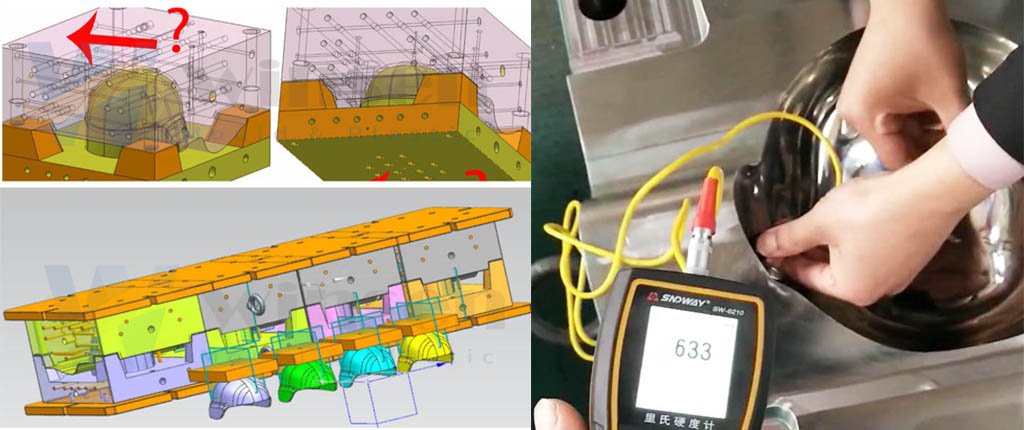
Compression molding is the preferred manufacturing method for UHMWPE ballistic helmets due to its ability to create complex geometries with uniform material density. Unlike injection molding, which can introduce shear stress and fiber misalignment, compression molding applies uniform heat and pressure across the entire helmet shell. This process preserves the unidirectional fiber integrity essential for stopping ballistic threats.
Table of Contents
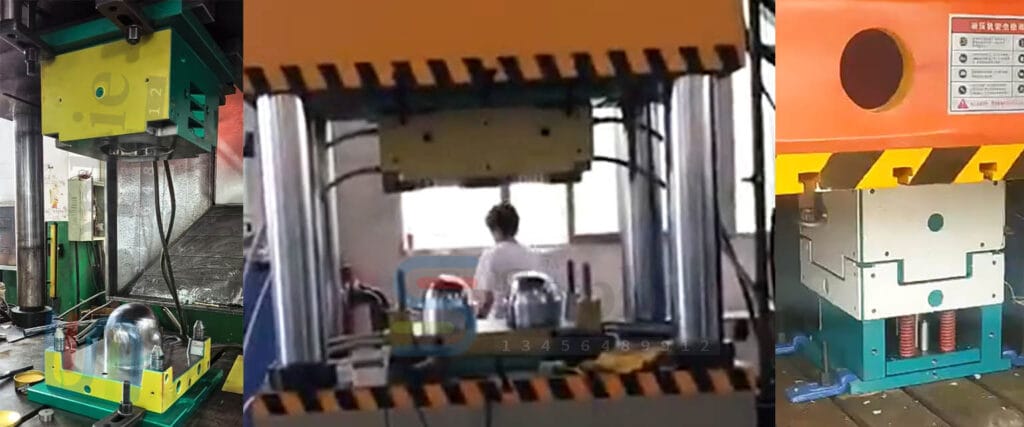
ToggleThis single helmet mold can be run on 315T hydraulic press systems, providing the precise force control necessary for UHMWPE consolidation. The process involves placing pre-cut UHMWPE composite layers—typically unidirectional tapes cross-plied at 0°/90° angles—into a heated mold cavity. The mold is then closed under controlled pressure and temperature cycles, allowing the matrix material to flow and bond while maintaining fiber orientation.
Helmet Mold Testing on Hydraulic Presses
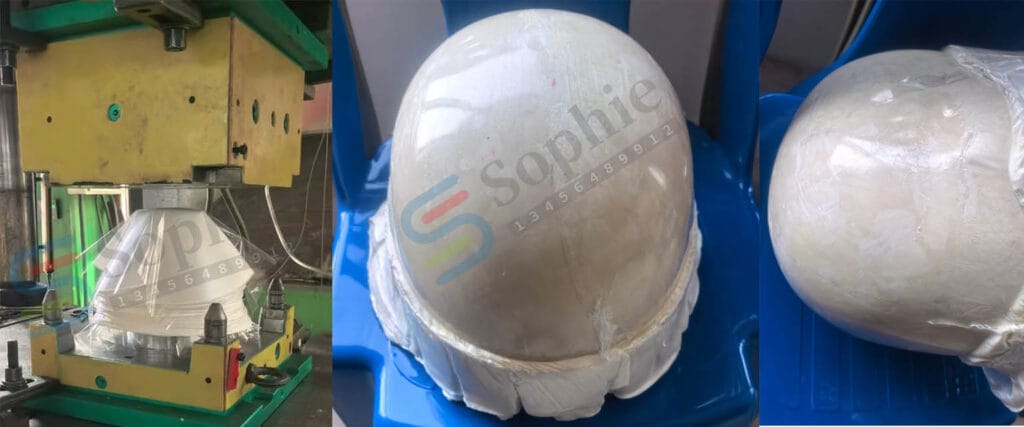
The image featured in this article captures a critical phase of our production workflow: helmet mold installation and testing on our hydraulic press system. This stage represents the bridge between mold design validation and full-scale production.
Mold Installation Process
- Parallelism: Upper and lower mold halves must achieve better than 0.05mm parallelism across the 300mm+ forming surface
- Thermal uniformity: 12-zone temperature monitoring ensures ±2°C variance across the mold cavity
- Pressure distribution: Pressure mapping sensors confirm uniform force transmission during initial test cycles
Test Production Protocol
- Dry cycling: 50+ press cycles without material to verify mechanical operation and heating response
- Material trials: Progressive testing with 20, 30, and 40-layer UHMWPE stacks to optimize pressure curves
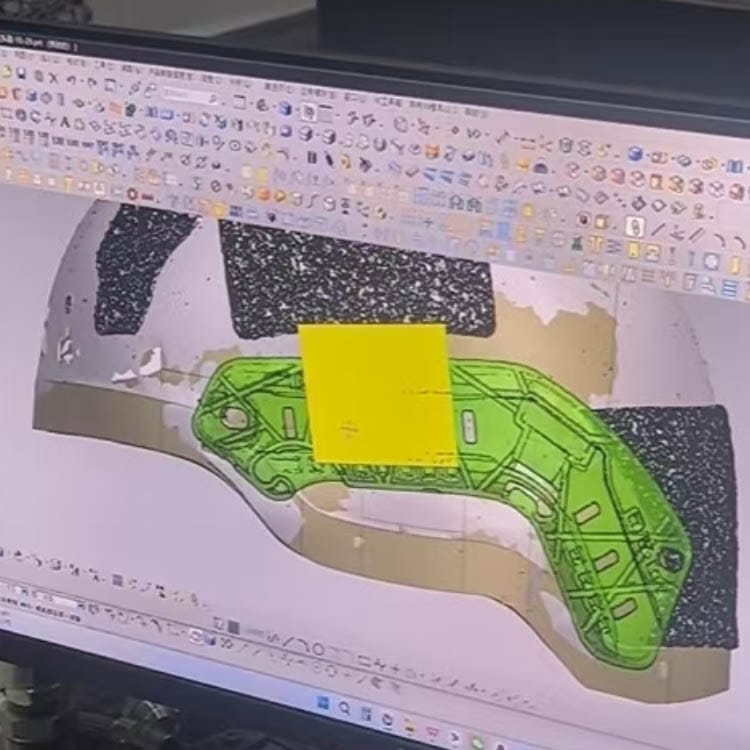
- Dimensional validation: Laser scanning of formed shells against 3D specification
Critical Process Parameters
Successful UHMWPE compression molding depends on precise control of four interdependent variables:
Temperature Management
UHMWPE matrix materials require staged heating. We employ ramp rates of 3-5°C/minute to prevent thermal shock, with hold periods at 80°C and 110°C before reaching peak forming temperature. Excessive heat causes matrix degradation and yellowing; insufficient heat results in poor interlaminar bonding.
Pressure Profiling
Our presses utilize programmable pressure curves rather than static force. Initial contact applies 5-10 MPa to seat material without fiber washout. Peak pressures reach 15-25 MPa depending on helmet thickness, followed by sustained consolidation pressure during cooling. The hydraulic system’s servo-controlled valves enable pressure adjustments every 50 milliseconds.
Cycle Timing
- Heating phase: 20-30 minutes
- Pressing/consolidation: 15-25 minutes
- Controlled cooling: 15-30 minutes (critical for residual stress management)
Cooling Rate
Quality Considerations in Mold Testing
- Fiber wrinkling: Visual inspection and ultrasonic testing detect preform distortion
- Thickness uniformity: Caliper measurements at 20+ points ensure ±0.3mm tolerance
- Edge definition: Trim line accuracy affects subsequent ballistic edge finishing
- Surface finish: Mold surface quality directly transfers to helmet exterior aesthetics
Ballistic Helmet Design Services
We provide free complete helmet design solutions tailored to your tactical requirements. Our engineering team transforms your specifications into production-ready 3D models, optimized for UHMWPE compression molding. From shell geometry and edge profiles to suspension mounting points and NVG shroud integration, we handle every design detail. Each design undergoes moldability analysis to ensure seamless manufacturing transition. Whether you need PASGT, MICH, or custom high-cut configurations, we deliver designs that balance ballistic performance, wearer comfort, and production efficiency—at zero design cost to qualified partners.