Mastering Compression Molding: Prototyping to Production
Compression molding serves as a flexible production technique employed by manufacturers of all sizes to fabricate an assortment of components, ranging from substantial aircraft elements to diminutive infant feeding bottle tips.
Throughout this guide, we intend to offer a basic understanding of compression molding, outline its advantages, and explore its uses. Subsequently, we will demonstrate the process’s potential for individuals to develop initial models, engage in large-scale part manufacturing, as well as handle all stages in between.
What Is Compression Molding?
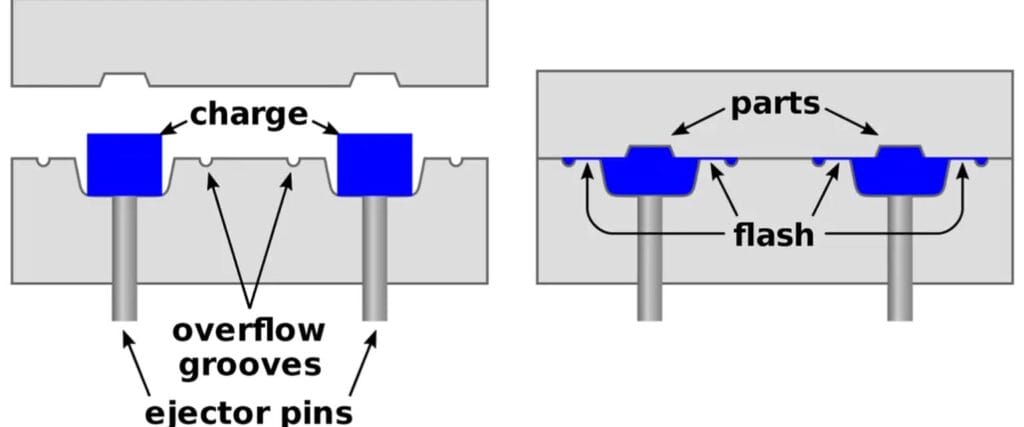
Compression molding refers to a production method where a specific, pre-heated quantity of material, often termed as a ‘charge,’ is pressed into shape between two heated dies.
How is Compression Molding Work?
The detailed procedure of compression molding is outlined below:
- Mold Fabrication: Molds are crafted through various techniques such as machining, die casting, or 3D printing.
- Machine Preparation: This involves mold cleaning, mold heating, and other preparatory steps specific to the equipment being utilized.
- Charge Preparation: Choose the appropriate material and measure out the correct quantity. An oversized charge can lead to material overflow and the creation of flash, which will require manual trimming.
- Charge Placement: Position the measured material at the center of the lower mold.
- Part Formation: Shut the upper mold, apply the necessary pressure, and allow the material to form into the desired shape. Heat is often applied to soften the material and expedite the molding process.
- Part Ejection: Once the material has set, the completed part is ejected from the mold.
- Part Finishing: The edges may have excess material, known as flash, which needs to be trimmed off. Additionally, the part may require cleaning before it can be assembled into the final product.
Compression Molding vs. Injection Molding
Comparing Compression Molding and Injection Molding reveals their distinct characteristics. While both processes are similar, the key distinction lies in the method of introducing the material into the mold: in compression molding, the material is placed within closed molds, whereas in injection molding, the material is injected into an already closed mold cavity.
Manufacturers today utilize both techniques depending on the part requirements. Injection molding is often preferred for intricate parts, whereas compression molding is ideal for simpler designs, including the creation of very large, basic shapes that extrusion methods cannot achieve.
Injection molding generally offers a quicker cycle time compared to compression molding, making it a faster and more economical option for mass production. On the other hand, compression molding operates at lower pressures, resulting in reduced tooling expenses and minimal material waste, which is particularly beneficial when using costly materials.
In summary, for mass production, injection molding is typically more suitable, whereas compression molding is more appropriate for producing parts in smaller to medium quantities.
Advantages and Disadvantages of Compression Molding
Having compared compression molding with injection molding, we can now explore the specific pros and cons inherent to compression molding.
Economical for Certain Applications
When it comes to manufacturing straightforward, generally flat, and large-scale components, compression molding often emerges as the most budget-friendly approach. While the method can handle some design curves and recesses, it struggles with extremely sharp angles and profound indentations. The lower pressures involved keep tooling expenses down, and the molds are usually durable, resisting deformation and avoiding premature replacement. Manufacturers can mitigate the expense related to the extended cycle times of compression molding by employing multi-cavity molds, enabling the simultaneous production of several parts.
Yields Robust Components
Compression molding is capable of delivering robust parts devoid of flow or knit lines, ensuring a high degree of structural integrity. Additionally, this process is well-suited for crafting parts from composite materials, facilitating the creation of enduring and corrosion-resistant products.
Design Versatility
Compression molding offers engineers and developers a versatile platform. For instance, prototyping can be efficiently accomplished through cost-effective compression molding. Basic molds can be conceptualized using CAD software, subsequently 3D printed, and employed to shape an assortment of materials with just a standard tabletop vise. Further along in this piece, we will illustrate an example of prototyping to demonstrate this approach.
The Versatility of Compression Molding in Various Applications
Compression molding is employed across a broad spectrum of applications. Below are examples of items and components we commonly encounter that incorporate parts made through compression molding:
- Automotive Components: A variety of sizable parts and panels for automobiles, tractors, and other vehicles are crafted through compression molding. This also includes numerous plastic parts found in vehicle interiors and engine components.
- Electronics and Gaming: Elements of video game controllers, keyboards, and similar devices can be produced via compression molding.
- Cookware: Numerous kitchen gadgets, utensils, and appliances feature parts that are created using compression molding. Tableware, such as bowls, cups, and plates, particularly those composed of melamine, are frequently manufactured with this method.
- Electrical Hardware: Compression molding is frequently utilized for producing electrical outlets, switches, faceplates, and metering equipment.
- Medical and Dental Equipment: A multitude of plastic and silicone parts utilized in the medical sector are made through compression molding, including components like syringe plungers and respiratory masks.
How to build Molds for Compression Molding
To fabricate molds for the compression molding process, various methods are available, contingent upon the material designated for molding. Fundamentally, the molds must be robust enough to endure the compression molding procedure, which includes enduring substantial temperature shifts if thermal energy is utilized. Additionally, molds must be capable of withstanding the pressurized forces exerted throughout the compression phase.
Explaining Compression Molds
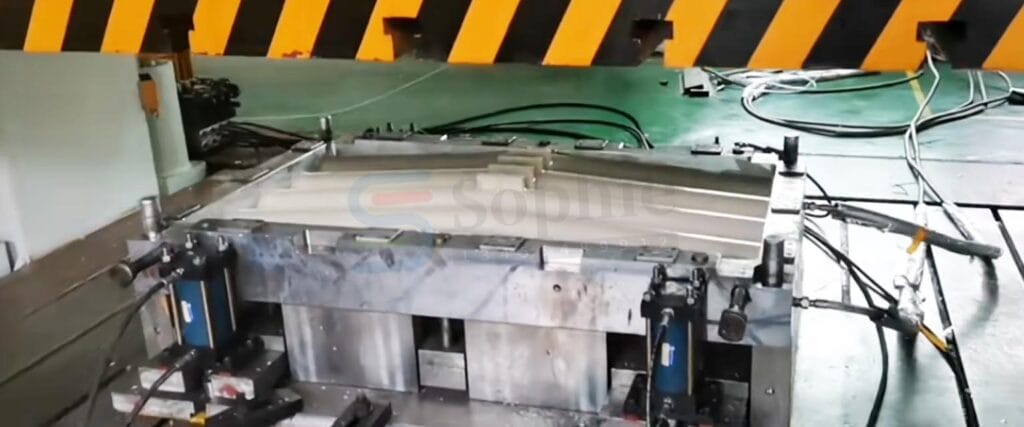
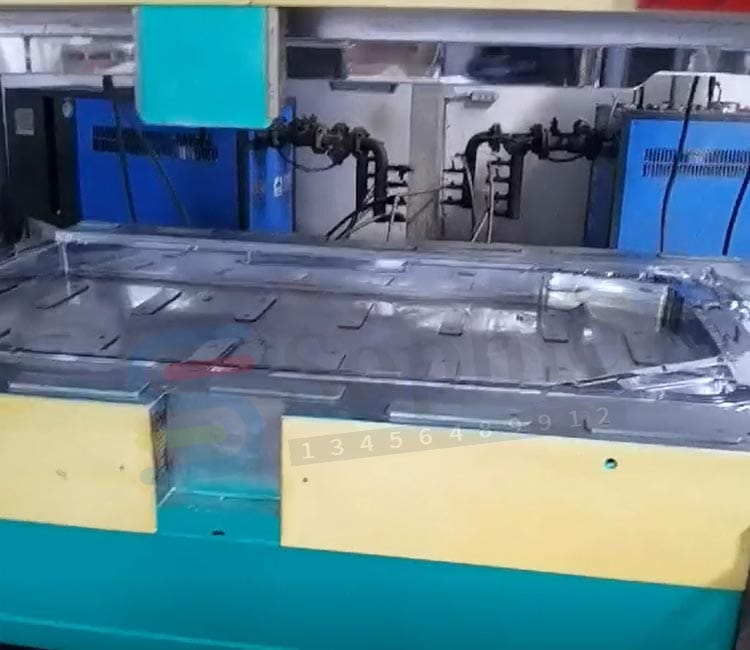
Compression molds, commonly crafted from steel or aluminum, are engineered to shape components from raw materials through the application of intense heat and pressure. Their capacity to tolerate extreme thermal and pressurized conditions makes them perfect for shaping parts from thermoset materials—plastics that solidify irreversibly when cured. The typical thermoset composites employed in compression molding encompass:
- Phenolic resin
- Epoxy
- Melamine
- Polyester
Although these materials dominate the compression molding landscape, thermoplastic materials are not precluded from use in this process.
Producing superior plastic parts begins with selecting the appropriate mold type and ensuring it is well-constructed for durability and performance. A high-quality compression mold consistently delivers precise, efficient, and uniform parts.
Table of Contents
ToggleTypes of Compression Molds
Among the various mold types—such as injection and compression, which are the most prevalent for part fabrication—there are also less common but still extensively utilized options like blow, transfer, rotational, thermoform, extrusion, and reaction injection molds.
Each mold type offers unique benefits for the manufacturing process. Compression molds, in particular, are favored worldwide for numerous reasons, including their cost efficiency and longevity.