Fiberglass(FRP) Bumper Compression Mold

Fiberglass bumper molds: an innovative solution in automobile manufacturing

What is a fiberglass(FRP) bumper compression mold?

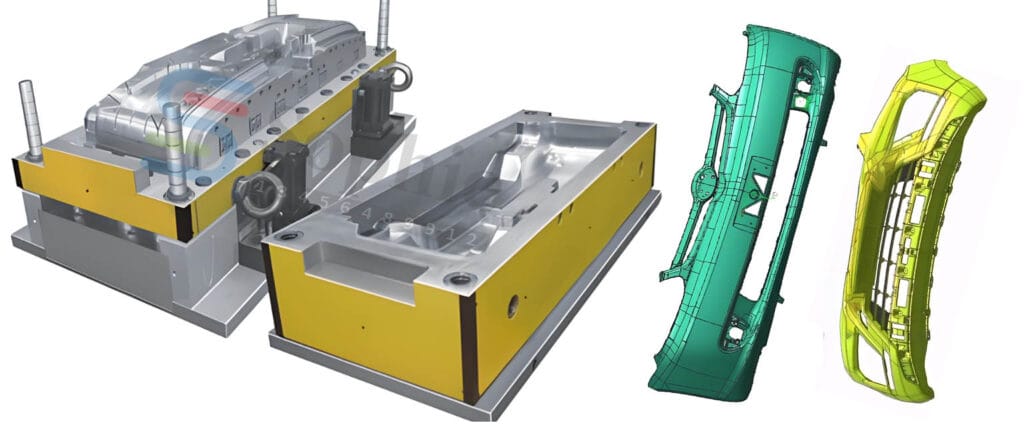
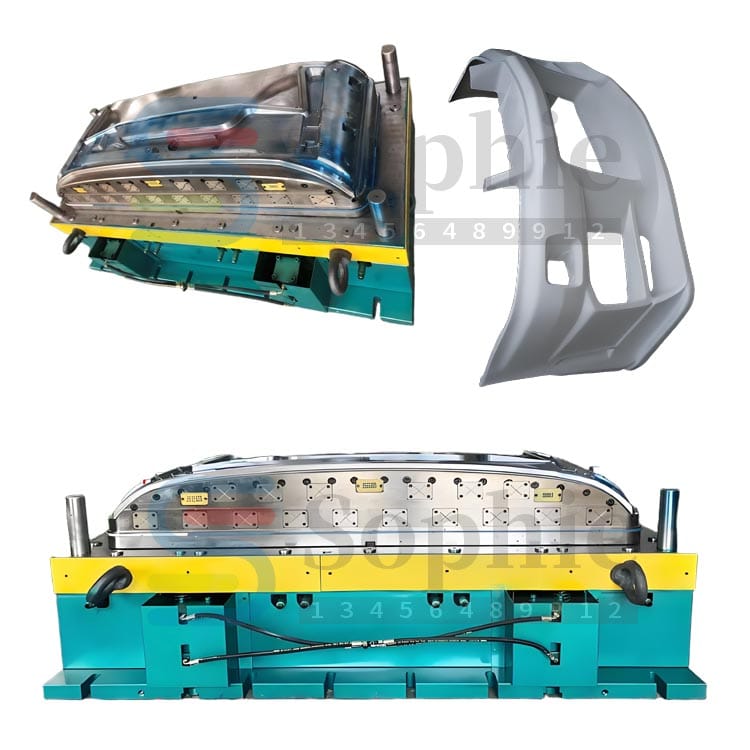
Fiberglass(FRP) bumper molds are key tools in the manufacture of automotive bumpers, determining their shape, size, and performance.which is compression molding mould. Fiberglass bumper molds are crucial for automotive lightweighting and safety protection; their selection directly impacts the bumper’s precision, durability, and production efficiency. The following is a detailed introduction:

Advantages of Fiberglass(FRP) Bumper Compression Mold

Lightweight Design

Fiberglass is renowned for its superior strength and lightweight properties. Compared to traditional metal materials, fiberglass bumpers can significantly reduce vehicle weight. This not only helps improve fuel efficiency, reduce energy consumption and emissions, but also enhances handling performance. Lightweight design is particularly important in the field of new energy vehicles, as it directly impacts driving range and performance.

High Strength and Durability

Fiberglass is a composite material composed of glass fibers and a resin matrix. This unique material structure endows fiberglass bumpers with extremely high strength and toughness. Fiberglass bumpers can effectively absorb and disperse impact forces in low-speed collisions, protecting critical vehicle components from damage. Furthermore, fiberglass has excellent corrosion resistance and anti-aging properties, maintaining its performance for extended periods under harsh environmental conditions, thus extending the bumper’s lifespan.

Design Flexibility

The design of fiberglass bumper molds allows for a high degree of customization. Due to the high plasticity of fiberglass, molds can be designed into various complex shapes and sizes to meet the exterior design requirements of different vehicle models. Whether it’s a streamlined, sporty style or a more sophisticated, business-like look, fiberglass bumpers can perfectly match the overall styling of a vehicle. This design flexibility provides automakers with more creative freedom, enabling them to create more attractive and competitive products.

Cost-Effectiveness

While the initial cost of fiberglass materials may be slightly higher than that of traditional metal materials, the use of fiberglass bumper molds can bring significant cost benefits in the long run. The durability and low maintenance costs of fiberglass bumpers mean that vehicles do not need frequent bumper replacements or repairs during use, thereby reducing the total life cycle cost of the vehicle. Furthermore, the recyclability of fiberglass materials gives it an environmental advantage, aligning with the requirements of modern society for sustainable development.
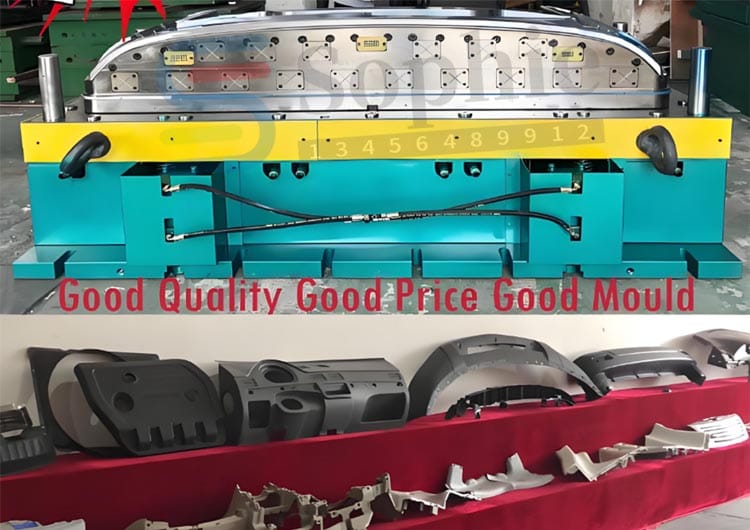
FRP Bumper Mold 5
Fiberglass(FRP) Bumper Compression Mold

Manufacturing Process of Fiberglass(FRP) Bumper Molds

Precision Design

Manufacturing high-quality fiberglass bumper molds begins with precise design. Designers use advanced Computer-Aided Design (CAD) software to create a 3D model of the mold based on the vehicle’s appearance and functional requirements. During this process, designers consider multiple factors such as structural strength, surface quality, and demolding performance to ensure the mold meets the demands of producing high-quality bumpers.

High-Precision Manufacturing

After design, the mold manufacturing process typically employs high-precision CNC machining technology. CNC machine tools can precisely machine each component of the mold according to the design drawings, ensuring dimensional accuracy and surface finish. Special surface treatment techniques, such as polishing and coating, are also used during mold manufacturing to improve mold lifespan and demolding performance.

Quality Control

Strict quality control is essential at every stage of mold manufacturing. The quality control team rigorously inspects and evaluates the mold’s dimensions, shape, and surface quality to ensure it meets design requirements and production standards. Only molds that have passed rigorous quality inspection can be used to produce fiberglass bumpers, thus guaranteeing product quality and consistency.

Application Cases

Luxury Car Brands

Many luxury car brands have begun using fiberglass bumper molds to produce bumpers for their high-end models. These brands prioritize vehicle aesthetics and quality, and the lightweight and design flexibility of fiberglass bumpers makes them an ideal choice. Through customized fiberglass bumper molds, these brands can create bumpers with unique shapes and superior performance, further enhancing their product’s market competitiveness.

New Energy Vehicle Manufacturers

New energy vehicle manufacturers are also actively adopting fiberglass bumper molds. Due to the higher requirements for lightweighting and environmental protection in new energy vehicles, the lightweight and recyclability of fiberglass bumpers make them an ideal solution. Furthermore, the high strength and durability of fiberglass bumpers also contribute to improving the safety of new energy vehicles, meeting consumers’ high expectations.

Commercial Vehicles

In the commercial vehicle sector, fiberglass bumper molds also have broad application prospects. Commercial vehicles typically operate in harsh environments, requiring high corrosion resistance and durability from bumpers. Fiberglass bumpers effectively resist ultraviolet radiation, chemical corrosion, and mechanical wear, thereby extending the bumper’s lifespan and reducing vehicle maintenance costs.

Conclusion

Fiberglass(FRP) bumper molds, as an innovative automotive manufacturing solution, are gradually changing the traditional production methods of bumpers. Their advantages, such as lightweight design, high strength, design flexibility, and cost-effectiveness, make them an ideal choice for automakers. With the continuous development of the automotive industry and increasingly stringent environmental requirements, the application scope of fiberglass bumper molds will further expand. Automakers and mold manufacturers need to collaborate closely, continuously exploring and innovating to drive the development of fiberglass bumper mold technology and bring more possibilities to the automotive manufacturing industry.

Solverwp- WordPress Theme and Plugin

Scroll to Top