
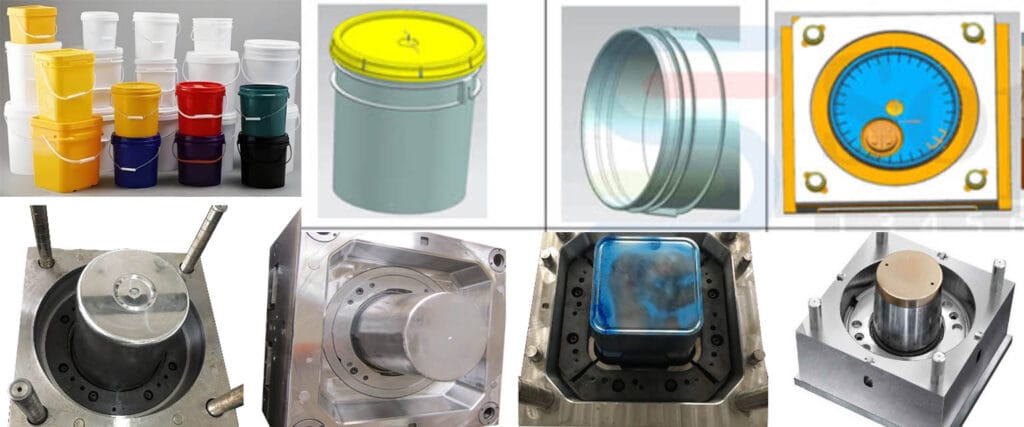
Top Bucket Mold Maker: Design & Manufacturing Guide
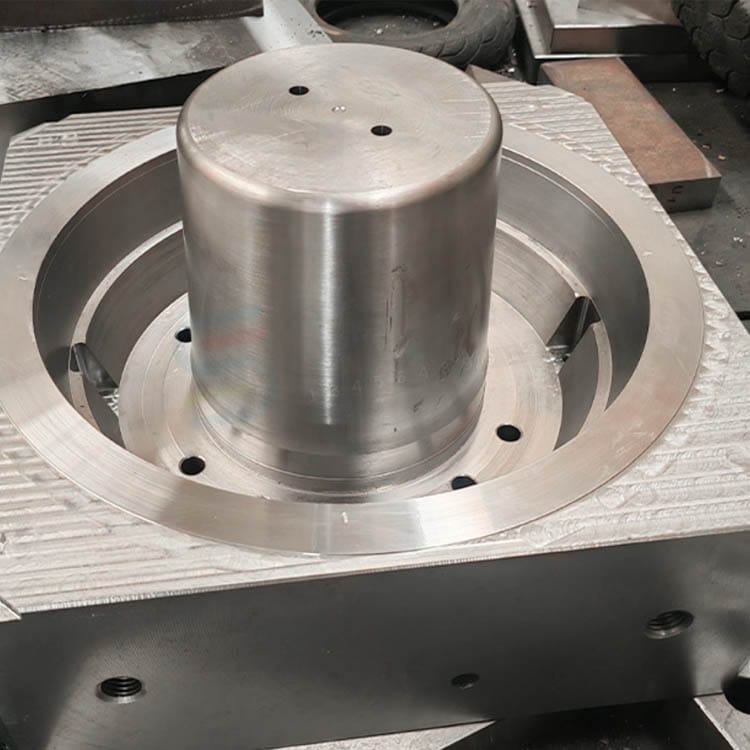
Critical Design Elements for Bucket Moulds
1. Core & Cavity Engineering
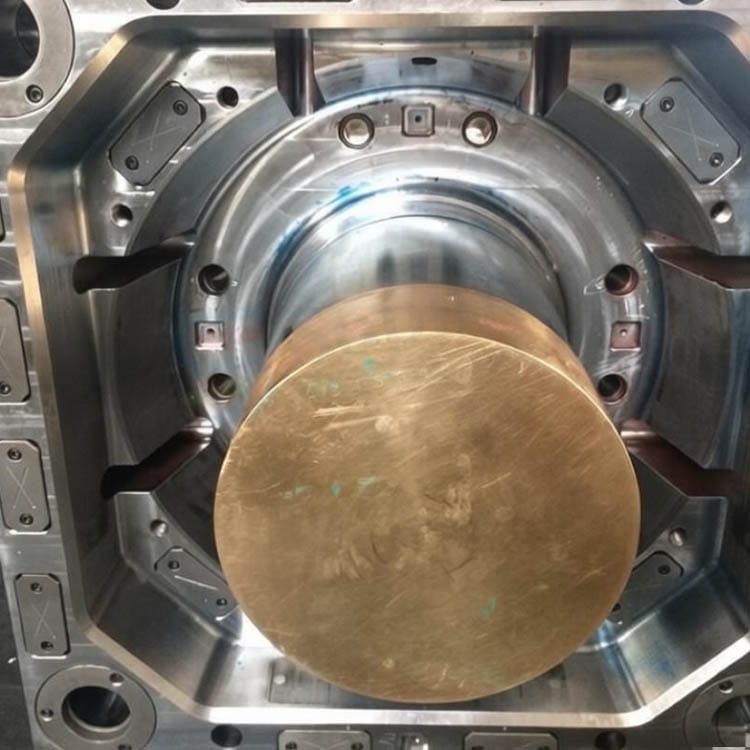
The foundation of every plastic bucket mold lies in its core and cavity construction. We utilize premium-grade steels like H13 (48-52HRC) and DIN 1.2738 with Beryllium Copper inserts to ensure optimal thermal conductivity and wear resistance . This material selection prevents mould eccentricity and extends tool life beyond 1 million cycles.
Table of Contents
Toggle2. Advanced Cooling Systems
Cooling channel design separates amateur moulds from professional-grade tools. Our engineers implement single-loop cooling with even distribution water channels throughout the cavity, core, and sliders . Strategic cooling placement reduces cycle times to 30 seconds while preventing warping and shrinkage defects.
3. Gating & Flow Optimization
For uniform filling of cylindrical bucket shapes, we employ three-plate mould structures with fine sprue systems and multi-point injection. Hot runner technology eliminates material waste and accelerates production—critical for high-volume manufacturing
Points to note in plastic bucket mold development
The primary issue in plastic bucket production is resolving product eccentricity. Eccentricity directly leads to uneven injection molding and cooling. Buckets produced this way cannot be used for long-term production and are irreparable later.
Secondly, there’s the issue of the mold production cycle (WS Mold). A standard 20L bucket typically has a cycle time of around 40 seconds. To increase efficiency, you need to reduce the cycle time, saving on labor, electricity, and time costs.
Regular customers generally choose P20 or 718H steel. High-end customers may choose 2738 with added beryllium copper. If customers request recycled materials, we encourage them to use chrome plating, which reduces the need for frequent polishing and saves time.
Manufacturing Process Excellence
Precision Machining
Our plastic bucket mould manufacturing workflow leverages high-speed CNC machines, EDM equipment, and engraving systems to achieve micron-level tolerances . Every component undergoes rigorous polishing to ensure seamless bucket surfaces and easy demolding.
Demolding Innovation
Complex bucket geometries require sophisticated ejection systems. We integrate air-assisted stripper plates with center ejectors for two-stage release, ensuring damage-free part removal even with deep-draw designs . For internal undercuts, our “bend pin + slider” mechanisms deliver reliable core-pulling action
Quality Validation
Before delivery, each mould undergoes T0 trial runs with Mold Flow analysis verification. We test for weld lines, sink marks, and dimensional accuracy—providing video documentation and sample batches for client approval
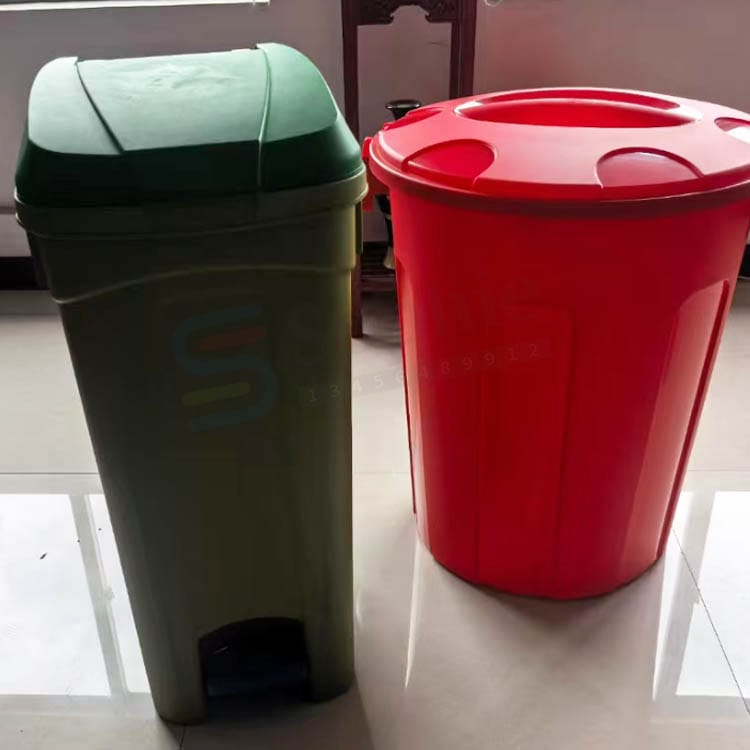
Industry-Specific Solutions
2026 Manufacturing Trends
- Industry 4.0 Integration: IoT sensors and AI-driven quality control for real-time monitoring
- Sustainable Materials: Optimized designs for recycled HDPE/PP and bioplastic processing
- Micro-Molding Precision: Advanced techniques for intricate handle attachments and thin-wall sections
Why Partner with Specialist Plastic Bucket Mould Maker?
✓ Million-shot durability with proper maintenance protocols
✓ Cost optimization through efficient cooling and minimal post-processing
✓ Technical consultation on material selection (PP vs. HDPE) and shrinkage compensation.
We provide customers with high-quality and aesthetically pleasing plastic bucket molds, along with top-notch service to meet the individual needs of each customer.
WS MOULD sincerely welcomes new and existing customers to contact us for business discussions! We look forward to sincere cooperation, joint progress, and mutual benefit!
Ready to upgrade your bucket production? Contact our engineering team for customized mould solutions that balance quality, speed, and long-term value.

