How Does Compression Molding Work?
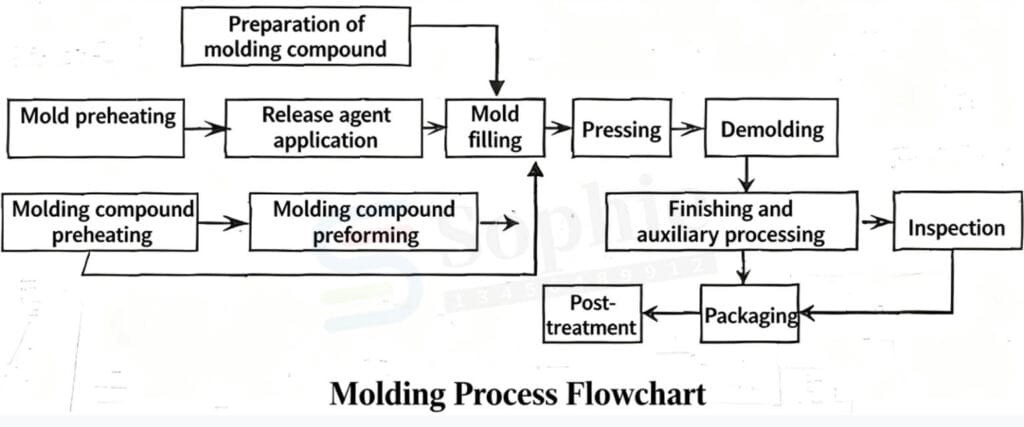
Core process steps of compression molding
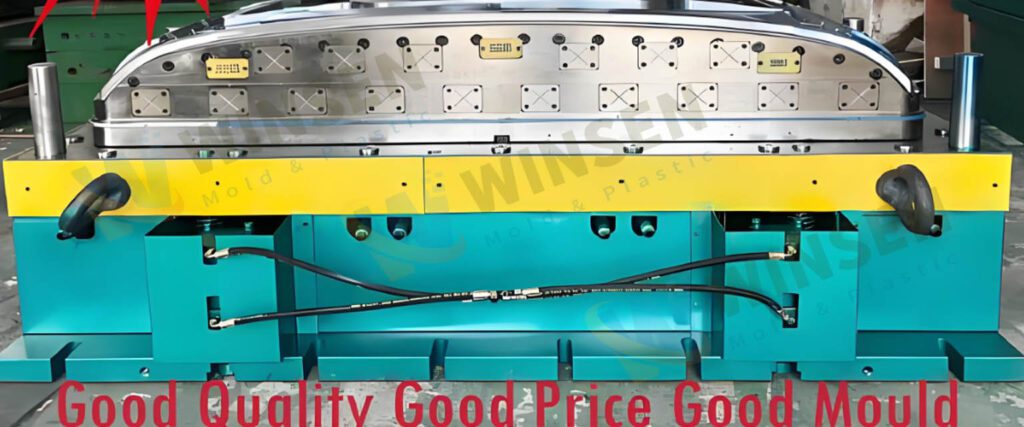
1. Mold Preparation and Setup: Mount the metal mold (usually made of steel or aluminum) onto the hydraulic press and preheat it to a specific temperature (typically between 290°F and 400°F).
Table of Contents
Toggle2. Charge Preparation: Accurately weigh the raw material (powder, granules, preformed material, or preformed block). Accurate measurement is crucial: too much will result in excessive flash, while too little will lead to an incomplete part.
3. Material Placement: Place the material in the center of the heated lower mold. For complex parts, the placement and orientation of the material directly affect the final performance.
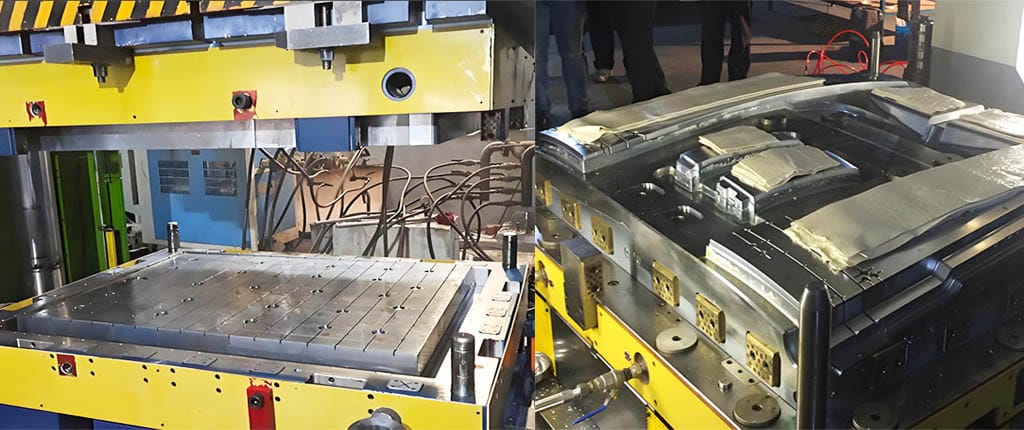
4. Mold Closure and Pressurization: The upper mold presses down, applying immense pressure (typically 150 to 2,500 tons) through the hydraulic press. Under high pressure, the heated and softened material flows and adheres tightly to every detail of the mold cavity.
5. Curing/Cross-linking: Maintain pressure and temperature until the material completes a chemical reaction (for thermosetting materials) or cools and hardens (for thermoplastic materials). At this stage, thermosetting materials form an irreversible network structure, giving them extremely high heat resistance.
6. Demolding and Finishing: Open the mold and remove the finished part. Excess material (i.e., “flash”) from the edges is then typically removed manually or mechanically.
Key technical parameters of compression molding
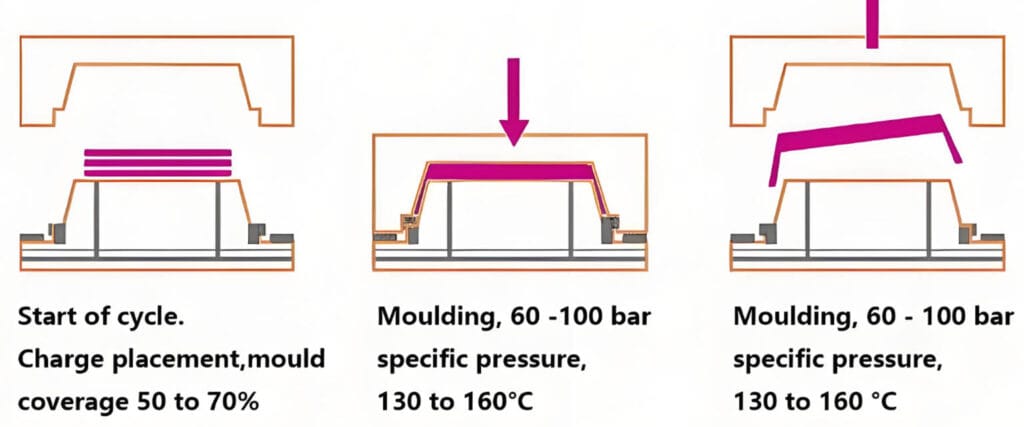
Pressure: Typically between 800 and 2000 PSI, depending on material flowability and part thickness.
Cycle Time: Varies from 1 to 10 minutes. While slower than injection molding, it is better suited for producing robust parts with thicker walls.
Common Materials:
- Thermosetting Materials: Epoxy resins, phenolic resins, melamine, silicone rubber.
- Thermoplastic Materials: High-density polyethylene (HDPE), PEEK, PPS.
- Composite Materials: Sheet molding compounds (SMC) and bulk molding compounds (BMC), typically reinforced with glass or carbon fibers.
| Material Category | Examples | Key Properties & Uses |
|---|---|---|
| Thermosets | Epoxy, Phenolic, Melamine | High heat resistance, excellent electrical insulation; used for circuit boards and kitchenware. |
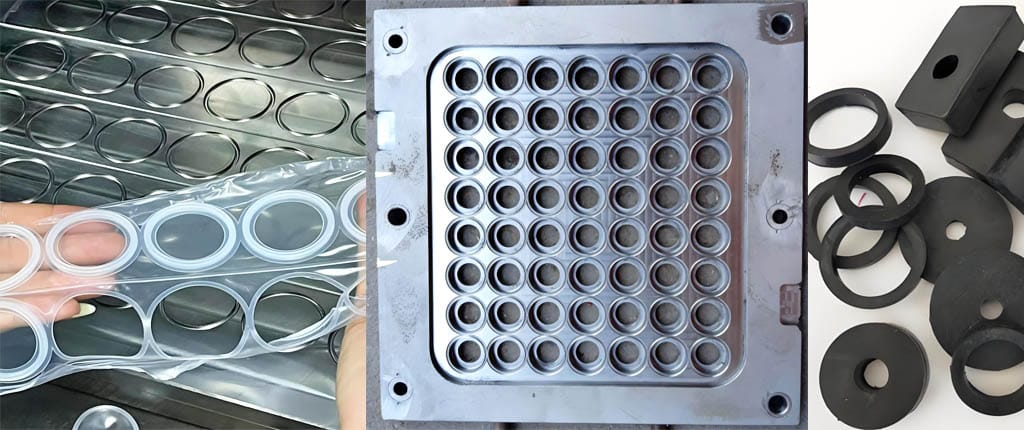
| Elastomers | Silicone, Nitrile, EPDM | Flexible and chemical-resistant; used for gaskets, seals, and medical devices. |
| Composites | SMC (Sheet), BMC (Bulk) | Fiber-reinforced (glass/carbon) for extreme strength; used for automotive body panels and aerospace parts. |
| Thermoplastics | HDPE, PEEK, PTFE | Recyclable and tough; used for high-impact industrial components and non-stick surfaces. |
Advantages and disadvantages comparison
| Advantages | Limitations |
|---|---|
| Lower Cost: Simple mold design with low initial investment. | Low Production Efficiency: Longer cycle times, unsuitable for ultra-large-scale production. |
| High Structural Strength: No flow marks or weld lines common in injection molded parts; suitable for structural components. | Complexity Constraints: Difficult to handle complex geometries with undercuts, small holes, or extremely thin walls. |
| Less Waste: High material utilization rate with minimal scrap generation. | Post-Processing: Almost all parts require manual flash removal. |
Typical applications of compression molding
Automotive Industry: Bumpers, fenders, engine hoods, dashboards.
Electronics & Electrical: Switches and sockets, control panels, circuit breaker housings.
Household Products: Melamine tableware (e.g., plates, bowls), kitchen utensil handles.
Aerospace & Medical: Aircraft structural components, syringe stoppers, gas mask seals.
Key Variables Influencing Compression Molding Outcomes
Like all thermoforming techniques, compression molding performance hinges on multiple process parameters. Temperature control stands out as particularly critical—insufficient thermal energy prevents the polymer from achieving proper flow characteristics, resulting in incomplete cavity filling. Conversely, excessive heat introduces its own complications: elevated internal pressures and prolonged cooling cycles that extend overall production time. The heating approach itself—whether using electric cartridges, steam, or hot oil systems—also plays a substantial role in determining final part quality.
In essence, compression molding represents a sophisticated manufacturing method where raw plastic material undergoes thermal conditioning before being compressed into a shaped die cavity. Its widespread adoption across industrial sectors stems from the dual advantages of high-volume output capability and exceptional material efficiency, generating significantly less scrap compared to alternative forming technologies.
Are you looking for molding parameters for specific materials (such as carbon fiber or rubber), or are you searching for equipment selection solutions for cost accounting? Welcome to contact us.