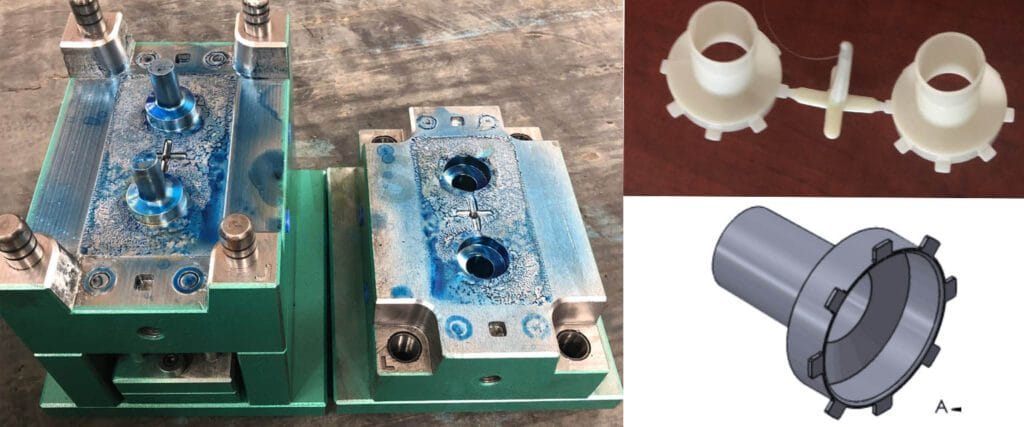
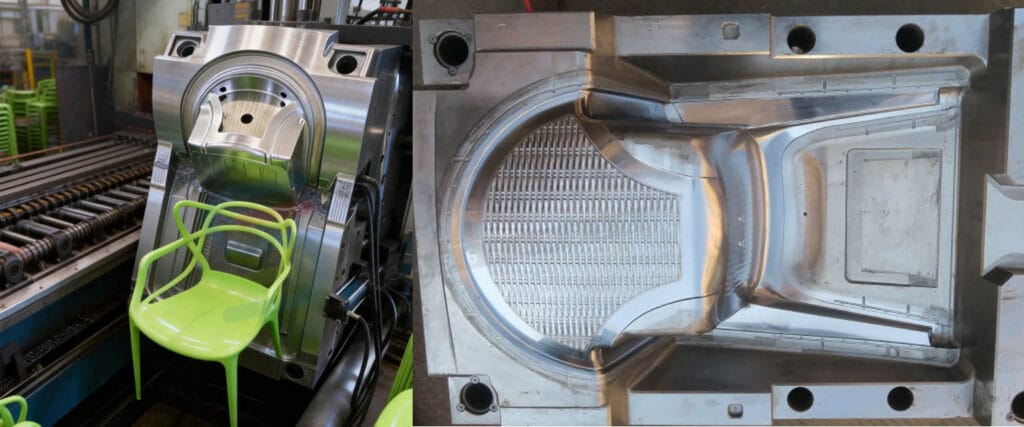
What is plastic injection chair molds
Plastic injection chair molds are injection molding tools specifically designed for producing plastic chairs. They work by heating and melting plastic and then injecting it into a mold cavity under high pressure. The core materials are alloy steel or carbon tool steel, and they are widely used in home, commercial, and outdoor applications.
Table of Contents
ToggleWe specialize in custom-made plastic injection molds for chairs. Bulk orders receive preferential pricing. Top quality, affordable prices, and excellent service. Contact to inquire!
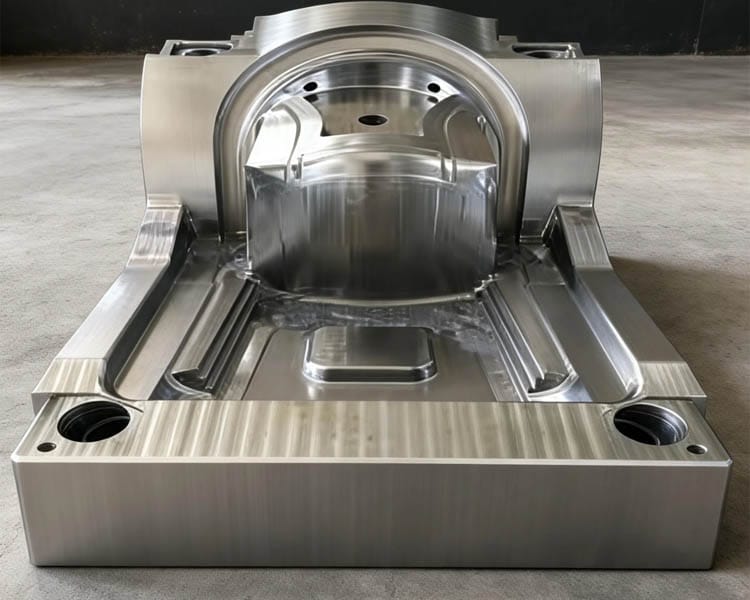
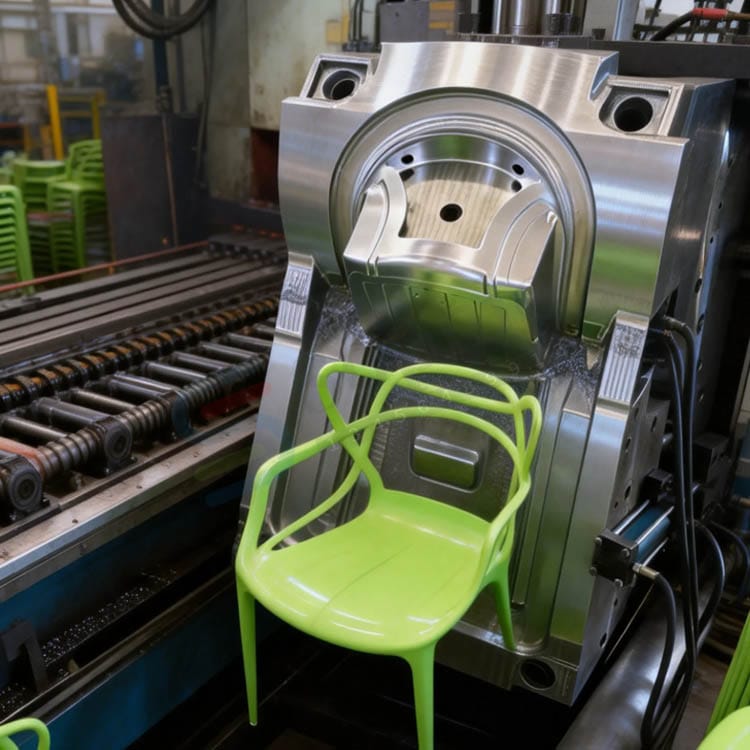
Classification and Types of Plastic Injection Molding Chair Molds
Plastic chair molds are mainly classified according to their structure and usage scenarios. Common types include:
Classification by Structure
- One-piece chair mold: Suitable for simple chairs (such as dining chairs), high overall molding efficiency, but higher maintenance costs.
- Separate chair mold: Used for complex designs (such as chairs with armrests or openwork), easy to replace parts, but requires strict assembly precision.
Classification by Function
- Ordinary plastic injection chair mold: Mass-produced basic chairs (such as food stall stools), low cost, short cycle time.
- High-precision plastic injection chair mold: For children’s chairs or office chairs, requires micron-level tolerances to ensure a smooth, burr-free surface.
Production Process and Key Technologies
Injection Chair Molds Design Phase
- Modeling is done using CAD/CAM software, and gate location is optimized using mold flow analysis to reduce bubbles and shrinkage marks.
- Key parameters: Cavity pressure needs to reach 80-120MPa, and cooling time should account for more than 60% of the cycle.
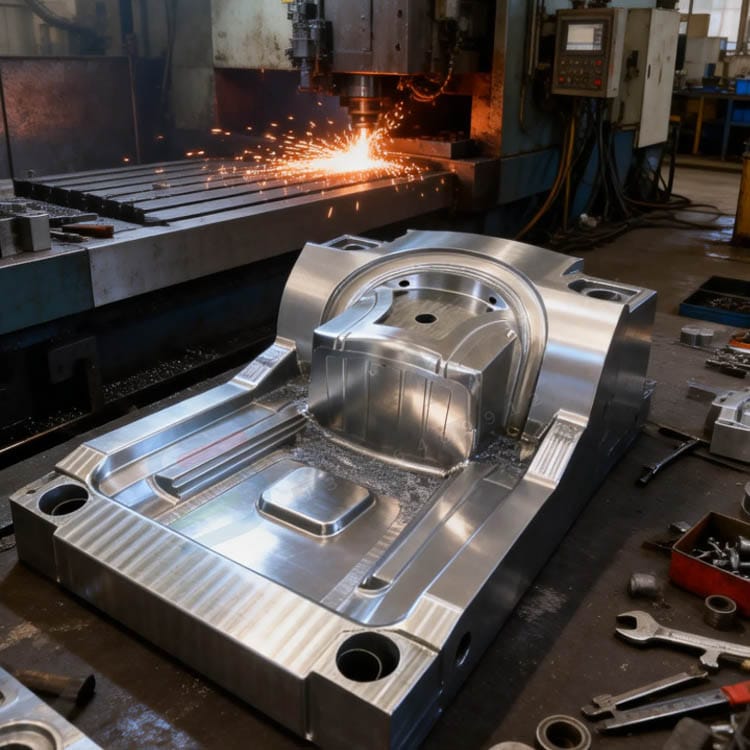
Plastic Chair Molds Manufacturing Stage
- Modeling is done using CAD/CAM software, and gate location is optimized using mold flow analysis to reduce bubbles and shrinkage marks.
- Key parameters: Cavity pressure needs to reach 80-120MPa, and cooling time should account for more than 60% of the cycle.
Plastic Injection Chair Molds Debugging and Maintenance
- During trial molding, adjust the injection temperature (180-220℃) and holding time to prevent warping and deformation.
- Regularly clean residual plastic and replace wear parts according to the “bathtub curve” pattern to extend mold life.
Material requirements, application scenarios and market demand
When choosing a plastic chair mold, the key factors are your production needs, budget, and chair design. Let me help you outline the crucial points:
Chair Plastic Mold Material Requirements
- The mold steel must be heat-resistant and corrosion-resistant, with chrome plating to improve demolding efficiency.
- Technical Parameters: Service life ≥ 500,000 cycles; draft angle 1°-3° to accommodate PP/ABS and other plastics.
Chair Injection Mold Application Scenarios
- Home Use: Dining chairs, children’s chairs (35% of demand), emphasizing safety and lightweight design.
- Commercial Use: Outdoor leisure chairs, theater chairs (45% of demand), requiring weather resistance and a load-bearing capacity of ≥200kg.
- Industrial Use: Logistics pallet chairs (20% of demand), requiring high strength and stability for mass production.
Chair Plastic Injection Molds Market Trends
- Global demand is projected to grow by 12% by 2025, with Taizhou in Zhejiang and Dongguan in Guangdong, China, serving as industrial clusters and accounting for 60% of production capacity.
- Customized demand is on the rise, with environmentally friendly materials (recycled plastics) and intelligent temperature-controlled molds becoming new hotspots.
Importance of Plastic Chair Molds in Modern Manufacturing
From a technical perspective: plastic chair molds primarily utilize the pressure of an injection molding machine to heat and melt plastic raw materials, which are then injected into the mold cavity. After cooling and solidification, the molded plastic chair is removed from the mold via a demolding mechanism. In this process, the mold’s design precision, material selection, and hot runner system design are crucial, directly impacting the chair’s molding quality, production efficiency, and mold lifespan.
In terms of applications: plastic chair molds have wide applicability. Whether it’s dining tables and chairs in home environments, conference chairs and office chairs in office spaces, or even waiting chairs and audience seating in public places, all can be produced using plastic chair molds. Furthermore, with increasing emphasis on environmental protection and sustainable development, more and more plastic chair molds are using recyclable or biodegradable plastic raw materials to meet market demand for green products.
Regarding industry standards: the production of plastic chair molds must adhere to a series of stringent quality standards and safety regulations. These include requirements for mold dimensional accuracy, surface finish, wear resistance, corrosion resistance, and safe operating procedures during production. Only molds that meet these standards and regulations can ensure the reliable, safe, and durable quality of the produced plastic chairs.
Several factors need to be considered when selecting a plastic chair mold. First, the number of cavities in the mold determines the number of chairs that can be produced in each injection molding cycle, thus affecting production efficiency. Second, the applicable raw materials for the mold are crucial; different plastic raw materials have different physical and chemical properties, requiring the selection of a matching mold material and hot runner system. Furthermore, the mold’s demolding method, lifespan, surface treatment, and overall dimensions are also important factors to consider.
There are manufacturers of plastic chair molds on the market, and their molds possess various characteristics. Some high-end molds are designed and manufactured using advanced CAD/CAM/CAE technology, offering advantages such as high precision, high efficiency, and long lifespan. Simultaneously, these molds emphasize environmental protection and sustainable development, using recyclable or biodegradable plastic raw materials and energy-saving and emission-reducing production processes.