SMC vs LFI: Which FRP Process Wins in 2026?
SMC vs LFI Mold compares two proven FRP technologies: Sheet Molding Compound versus Long Fiber Injection. This 2026 manufacturer guide analyses material formulation, cycle time, tooling cost, surface quality and real factory footage so you can pick the winning process for automotive, construction or spa applications.
Table of Contents
ToggleWhat Is SMC Mold? (Sheet Molding Compound)
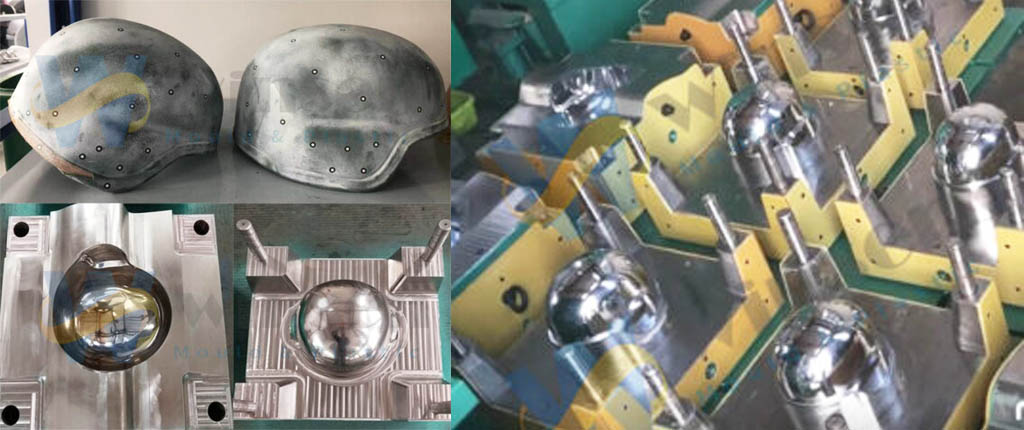
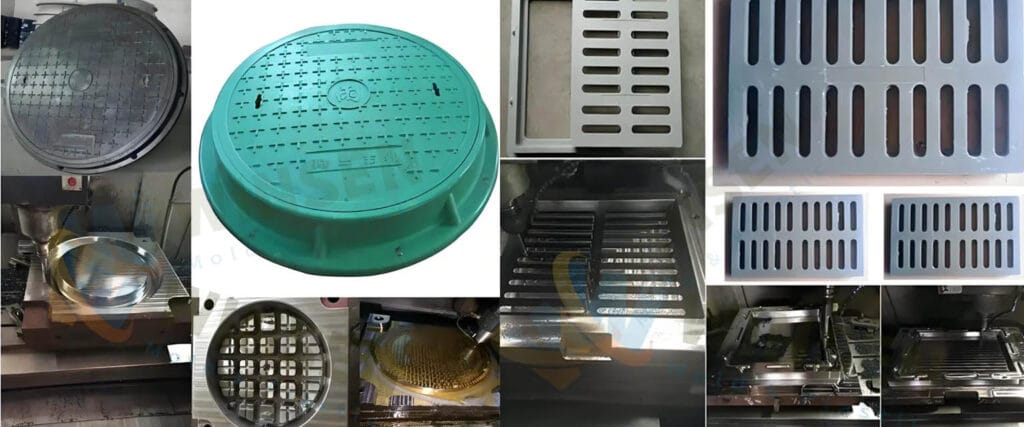
SMC is a glass-fiber mat pre-impregnated with unsaturated polyester resin, calcium carbonate and additives. The mat is cut into “charges”, placed in a heated mold and cured under 15–30 MPa for 60–120 s. Result: high-strength, Class-A parts without post-finishing.
The Compression Molding Process
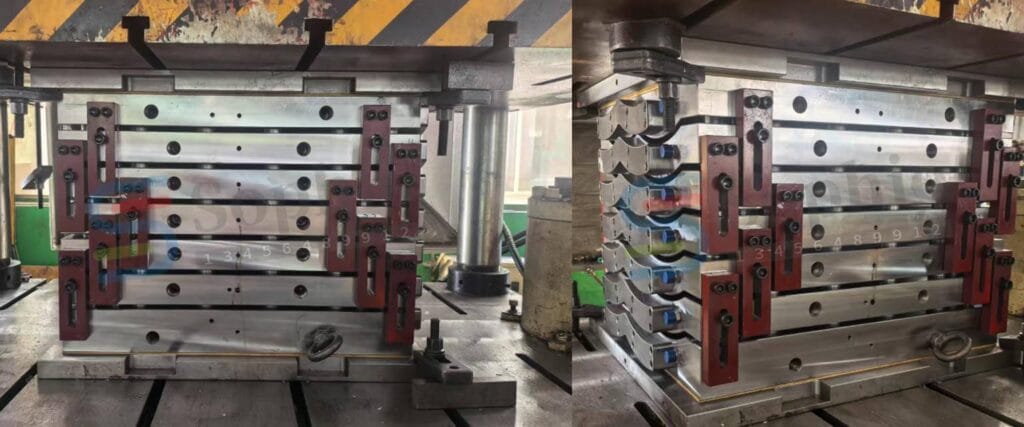
Compression molding is carried out in a hydraulic press where the upper and lower mold halves are mounted between heated platens. Pre-warmed SMC is laid into the lower cavity; the upper platen then descends, exerting up to 2000 psi. Sustained heat and pressure force the compound to flow and completely fill the cavity, enabling accurate, complex geometries without post-machining.
Advantages of SMC(Sheet Molding Compound)
What Is LFI? (Long Fiber Injection)
Long Fiber Injection (LFI) is the next-generation FRP route: chopped glass up to 50 mm is mixed with low-temperature polyurethane at the nozzle and robot-sprayed into the cavity. Cure completes in minutes under 0.5 MPa, so the entire shot—from fill to demould—takes less time than a coffee break. The result is 40 % lighter than SMC and 60 % lighter than steel, yet impact strength and surface quality remain on par with heavier thermosets. Lower mould pressure, aluminium tools and smaller presses shrink capital outlay, while near-zero scrap keeps running costs lean. For weight-critical, cost-sensitive or large-surface parts, LFI simply does more with less.
We like to say: if SMC can achieve it, LFI does it leaner.
- Fast takt? Robot-spray + low-pressure cure clocks in under three minutes.
- Complex ribs, bosses, undercuts? The robot lays fibers exactly where strength is needed.
- Impact performance? Longer strands absorb energy better than short-mat bundles.
- Class-A right out of the tool? Gloss, matte or wood-grain texture — no post-spray booth required.
Material Face-Off - 2026 Formulation
| Property | SMC | LFI | Note |
|---|---|---|---|
| Fiber Length | 25 mm mat | 25–50 mm chopped | LFI longer → higher impact |
| Matrix | Polyester | Polyurethane | PUR tougher, lower exotherm |
| Density | 1.8 g/cm³ | 1.1 g/cm³ | LFI 40 % lighter |
| Cycle Time | 90 s hot press | 180 s low-pressure | SMC faster, LFI cooler |
Cycle Time & Energy - Factory Floor 2026
Part size 600 × 400 × 3 mm, annual 20 k pcs:
- SMC Tool: P20 hardened, 12 k USD, 50 k shots
- LFI Tool: Aluminium alloy, 6 k USD, 30 k shots
- Press: SMC 1 500 t vs LFI 400 t (−60 % capital)
- Total Piece: SMC 16.8 USD vs LFI 13.1 USD (−22 %)
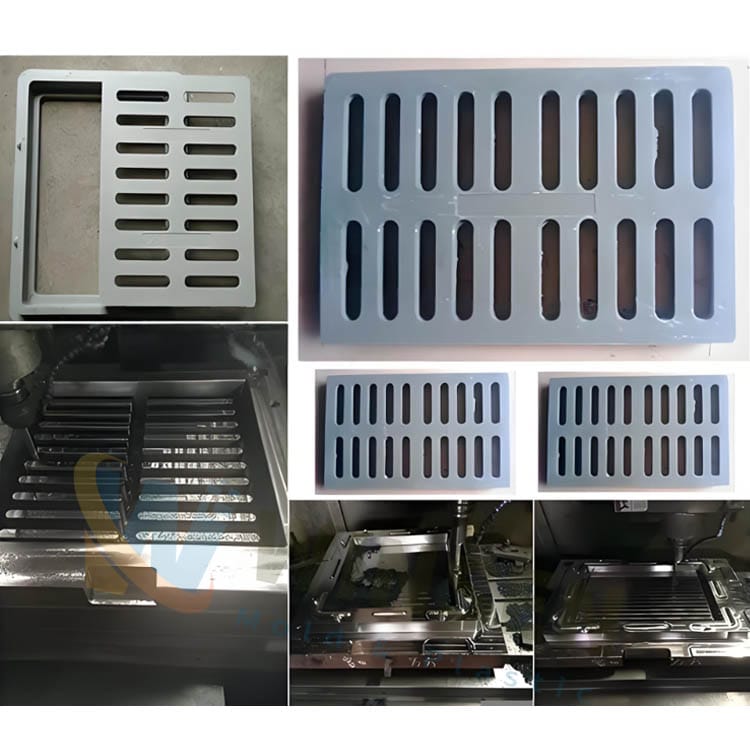
Surface Quality & Post-Processing
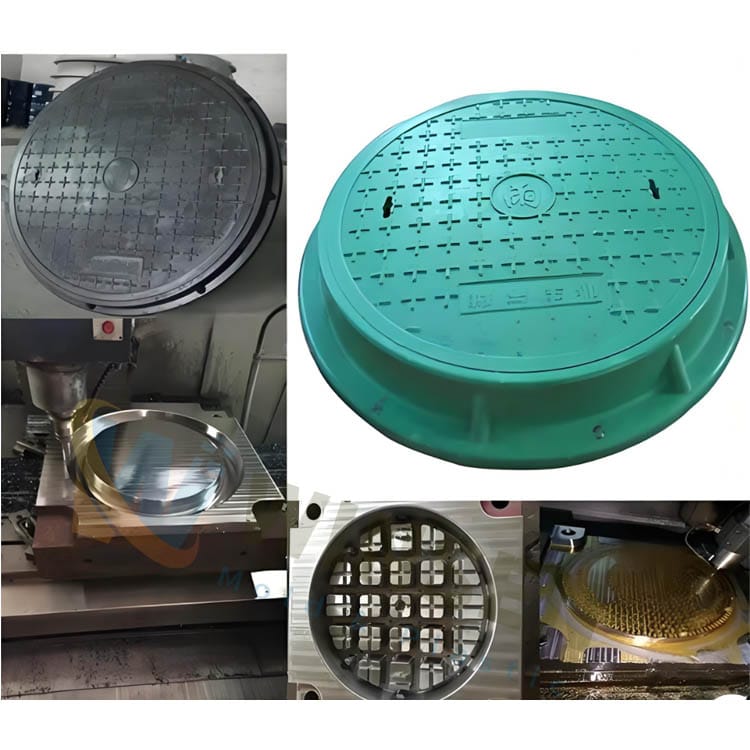
- SMC: Class-A out-of-mold, primer optional
- LFI: Class-A + texture capable, in-mold paint ready
- Weight: LFI 40 % lighter than SMC, 60 % vs steel
- Waste: LFI near-zero scrap; SMC 3–5 % trim waste
Which Process to Choose in 2026?
- Annual volume >50 k? → SMC (faster cycle)
- Part weight critical? → LFI (40 % lighter)
- Very large parts (>2 m)? → LFI (low-pressure, big bed)
- High-impact requirements? → LFI (longer fibers)
- Budget tight? → LFI (lower tool + press cost)
Real Factory Case - 1 400 t SMC vs 400 t LFI
Same automotive tailgate 1 200 × 800 mm:
- SMC: 95 s cycle, 14.2 USD, weight 4.8 kg
- LFI: 180 s cycle, 11.3 USD, weight 2.9 kg (−40 %)
- Decision: OEM chose LFI for weight & cost, accepted longer cycle
>Why Choose WS MOLD for SMC or LFI?
- 1 400 t SMC and 400 t LFI lines in-house
- P20 → H13 or Aluminium tool options
- Class-A surface Ra ≤ 0.6 µm guaranteed
- 50 k shots warranty, on-line support
- DFM report in 48 h, T1 sample in 35 days
LFI’s surface is born ready: glossy, matte or textured—no post-spray needed. From stone veins to wood grain, the robot-applied skin replicates micron-level detail straight from the tool.
Car skins, spa shells, architectural façades—if you need beauty without a paint booth, LFI delivers.
Ready to switch? Contact WS(Winsen) Mold today and launch your next surface revolution.