Plastic Injection Flower Pot Molds: Engineering Sustainable Solutions for Modern Horticulture
The global horticulture industry is experiencing unprecedented growth, driven by urban gardening trends and sustainable agriculture initiatives. Plastic injection flower pot molds have evolved from simple commodity tooling to sophisticated systems producing biodegradable containers, self-watering systems, and stackable designs that reduce logistics costs by 60%.
Table of Contents
ToggleModern injection mold engineering balances aesthetic requirements with environmental responsibility, serving nurseries, urban farms, and retail garden centers worldwide.
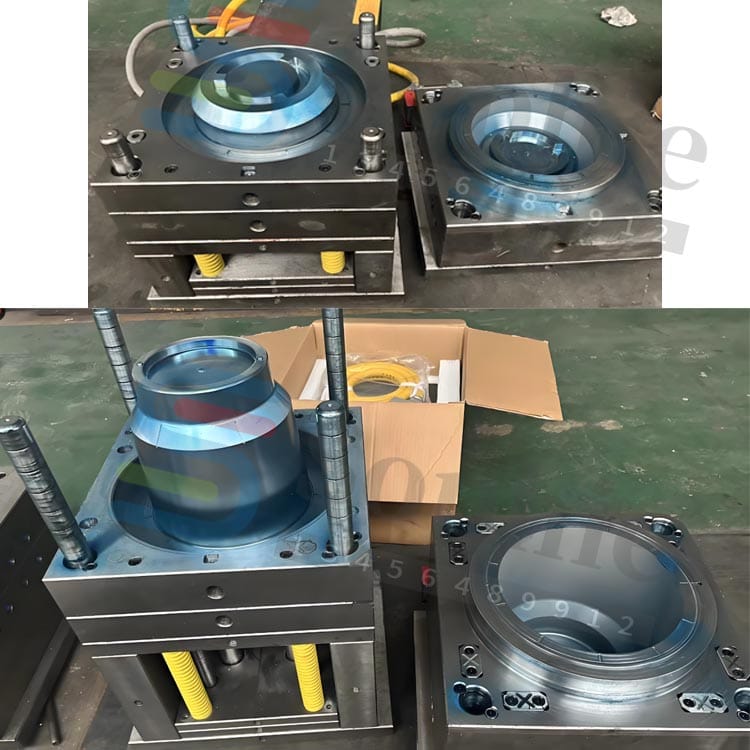
Market Evolution: From Commodity to Smart Containers
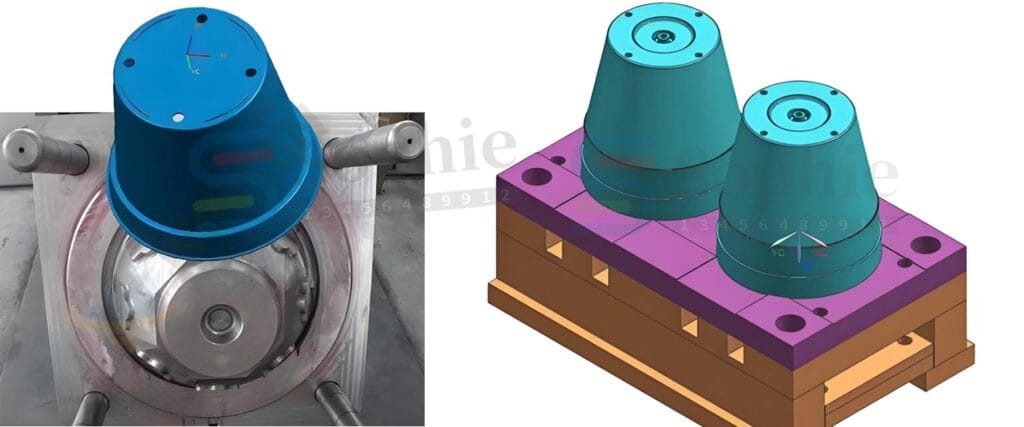
Stackable Nesting Designs minimize transportation volume—critical for global supply chains where shipping empty pots across continents requires cost efficiency. Mold designs incorporate tapered walls with precise draft angles (2-3 degrees) ensuring pots nest securely without jamming, while maintaining structural integrity for automated filling lines.
Biodegradable Material Integration responds to environmental regulations banning conventional plastics. Polylactic acid (PLA) and bio-based polypropylene formulations require specialized plastic injection flower pot molds with adjusted cooling systems and venting profiles. PLA’s lower thermal resistance (max 52°C) demands optimized cycle times to prevent degradation, while bio-additives require hardened steel cavities to resist abrasive fillers.
Critical Mold Design Parameters
Material Flow and Gate Engineering
Cooling System Optimization
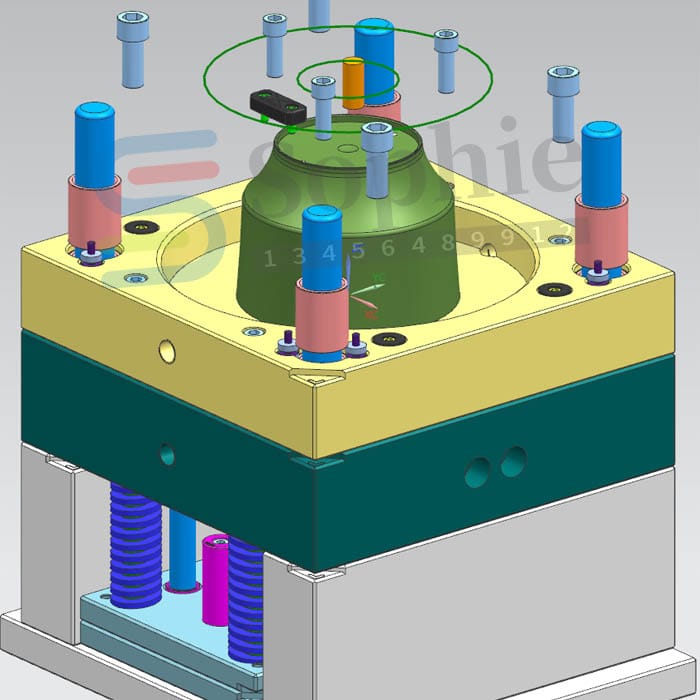
Ejection System Innovation
- Air ejection systems for pots without bottom holes, using compressed air to float parts off cores without marking surfaces
- Stripper plate mechanisms for standard designs, ensuring uniform force distribution across the pot rim
- Balanced ejector pins positioned at functional ribs or hidden surfaces for premium decorative pots
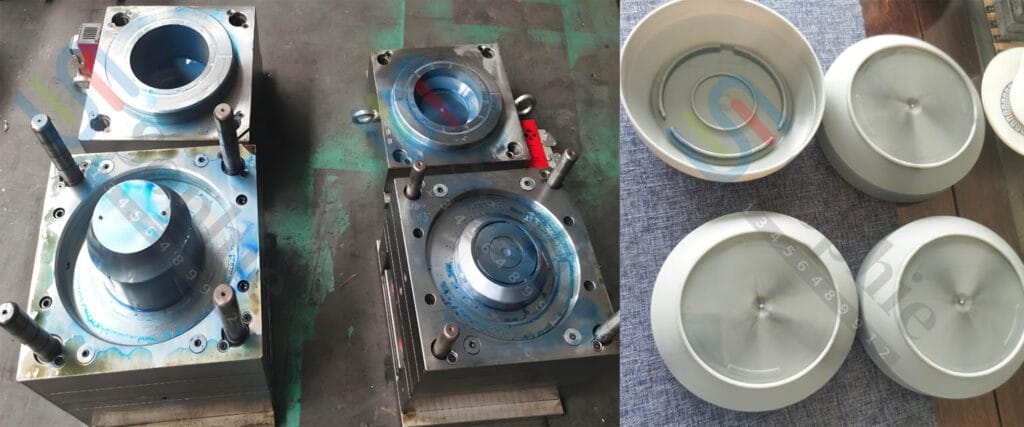
Steel Selection and Mold Longevity
| Production Volume | Steel Grade | Hardness | Expected Lifespan |
|---|---|---|---|
| Prototype/short-run | P20 | HRC 28-32 | 100,000 shots |
| Medium-volume nursery | 718H | HRC 33-38 | 300,000 shots |
| High-volume retail | H13 | HRC 48-52 | 1,000,000+ shots |
| Biodegradable/abrasive | S136 | HRC 48-52 | 500,000 shots |
Surface Finish and Aesthetic Engineering
- High-gloss polishing (SPI-A2) for decorative indoor pots mimicking ceramic appearance
- Textured finishes simulating terracotta, stone, or woven rattan through chemical etching or laser texturing
- Matte soft-touch surfaces via overmolding TPE layers for ergonomic handling
Sustainable Manufacturing Practices
Quality Assurance for Living Products
- Chemical inertness: No residual mold release agents or volatile compounds affecting sensitive root systems
- Drainage functionality: Precision-molded holes maintain ±0.5mm diameter tolerances for consistent irrigation
- UV stability validation: 2,000-hour QUV testing confirms material and color stability for outdoor nursery environments
Conclusion
The plastic injection flower pot mold has transformed from simple commodity tooling into sophisticated systems enabling sustainable horticulture. By integrating stackable geometries, biodegradable material compatibility, and smart functional features, mold engineers support an industry transitioning toward environmental responsibility without sacrificing production efficiency. As urban agriculture expands and consumer preferences shift toward eco-friendly gardening, investment in advanced flower pot molding technology positions manufacturers at the forefront of green industry growth.
Ready to develop precision flower pot molds for your nursery or garden product line? Contact our engineering team for sustainable material consultation, stackable design optimization, and custom tooling solutions tailored to your production volume and environmental goals.