
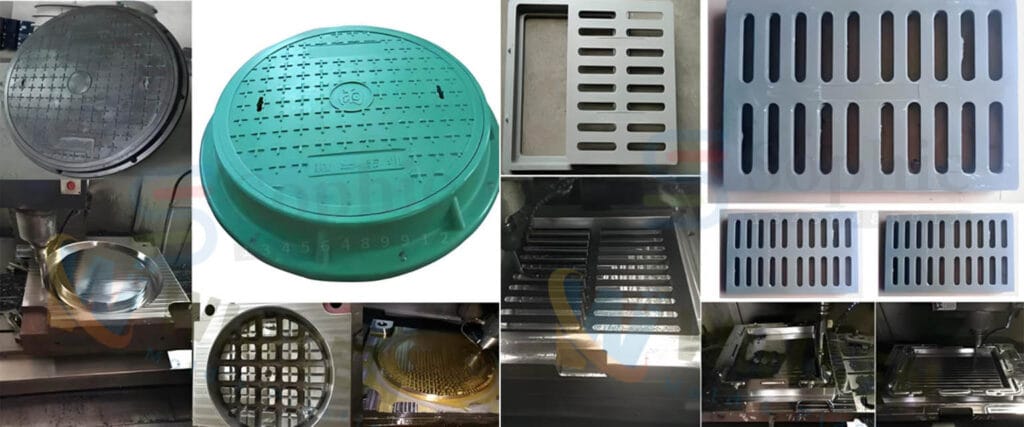
Manhole Cover Mould: Engineering Composite Solutions for Municipal Infrastructure
The Composite Advantage: Why SMC/BMC Dominates
- Anti-theft properties: Zero scrap value eliminates theft motivation—a persistent problem with metal covers
- Corrosion immunity: Unaffected by coastal salt, acid rain, or chemical exposure
- Load-bearing capacity: SMC covers achieve 400-900KN ratings, supporting heavy truck traffic
- Service lifespan: 5-10 years longer than cast iron in harsh environments
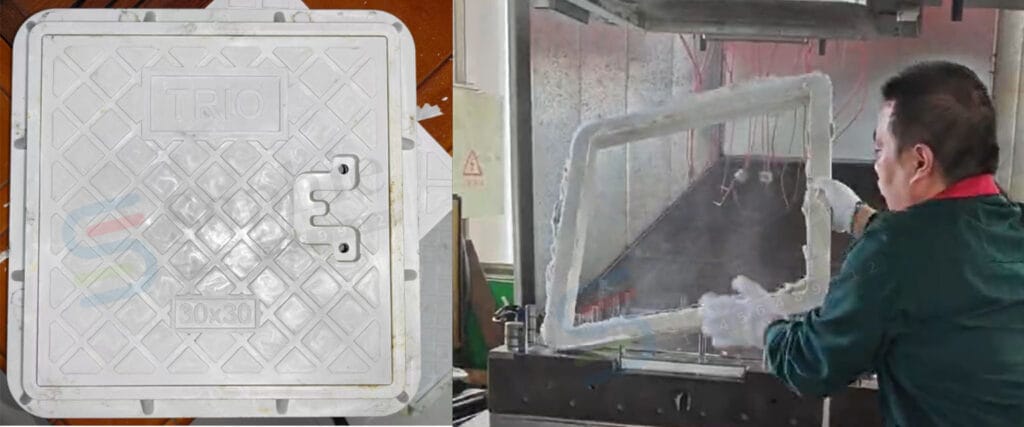
Compression Mould Design Essentials
Manhole cover mould engineering for SMC production requires specialized approaches distinct from conventional injection molding:
Table of Contents
ToggleMold Structure Configuration
- Venting systems: Scientifically positioned vents release trapped air during compression, preventing surface defects and ensuring complete fiber wet-out
- Heating channels: Oil or electric heating circuits ensuring uniform temperature distribution across large cavity surfaces
- Ejection mechanisms: Oil cylinder or mechanical ejection systems compatible with hydraulic press operations
Steel Selection and Heat Treatment
| Component | Steel Grade | Hardness | Application |
|---|---|---|---|
| Cavity/Core | P20, 718H, H13 | HRC 28-52 | General production, high-volume runs |
| Mold Base | S45C, S50C | Standard | Structural support |
| Wear Plates | Nitrided P20 | HRC 48-52 | Sliding components |
Manufacturing Process Parameters
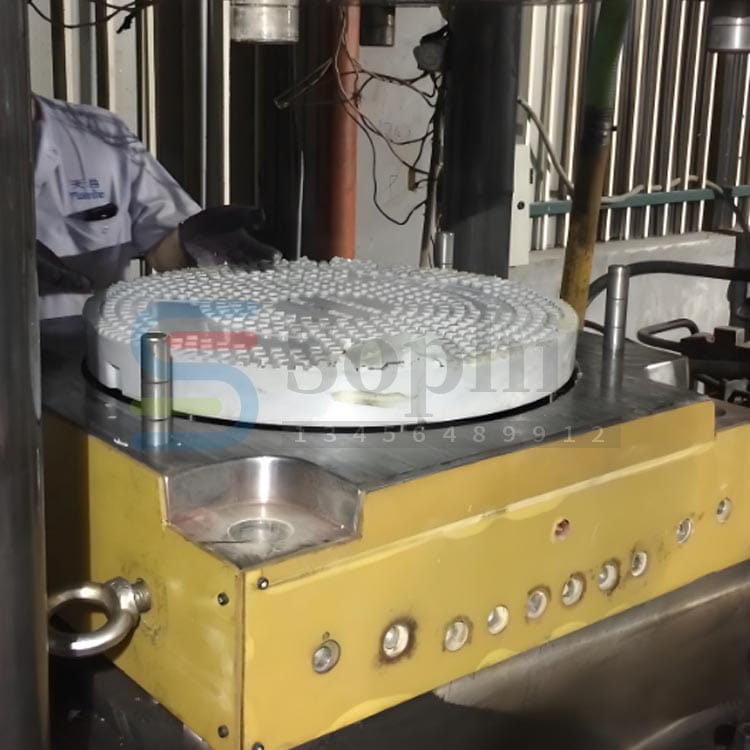
- Material charging: Pre-weighed SMC sheets placed in heated mold cavity
- Compression: Hydraulic press applies 500-4000 tons pressure depending on cover diameter
- Curing: 1-5 minute cycle time at 140-160°C enables complete cross-linking
- Demolding: Automated ejection removes finished cover with integrated frame
Load Ratings and Regulatory Compliance
| EN124 Class | Load Rating | Application | Typical Size |
|---|---|---|---|
| A15 | 15 kN | Pedestrian areas | 600mm |
| B125 | 125 kN | Sidewalks, parking | 700mm |
| C250 | 250 kN | Roadside channels | 750mm |
| D400 | 400 kN | Roadways, traffic | 800-900mm |
| E600 | 600 kN | Heavy industrial | 900mm |
Smart City Integration and Future Trends
- RFID integration: Molded-in pockets for sensor embedding, enabling remote monitoring of underground utilities
- Radio transparency: Composite materials allow uninterrupted communication signals, facilitating smart grid management
- Modular platforms: Interchangeable mold inserts enabling single tooling to produce multiple cover sizes and load ratings
- Sustainable formulations: Recycled content integration and low-VOC resin systems meeting environmental regulations
Quality Assurance Protocols
- Dimensional CMM verification: Ensuring frame-to-cover fit tolerances within ±0.5mm
- Load testing: Static and dynamic compression testing to EN124 requirements
- Environmental cycling: -50°C to +300°C thermal shock validation
- UV exposure: Accelerated weathering tests confirming 20+ year color stability
Conclusion
The manhole cover mould represents a critical intersection of materials engineering and municipal infrastructure needs. By leveraging SMC/BMC compression molding technology, manufacturers can deliver composite covers that outperform traditional materials across every metric—strength, weight, durability, and cost-effectiveness. As urbanization accelerates and smart city initiatives expand globally, investment in precision compression tooling for composite manhole covers positions manufacturers at the forefront of infrastructure modernization.
Ready to develop precision manhole cover moulds for your municipal infrastructure projects? Contact our engineering team for load rating analysis, DFM consultation, and custom compression tooling solutions tailored to EN124 and local regulatory standards.

