Thin Wall Lunch Box Mold: Engineering the Future of Sustainable Food Packaging
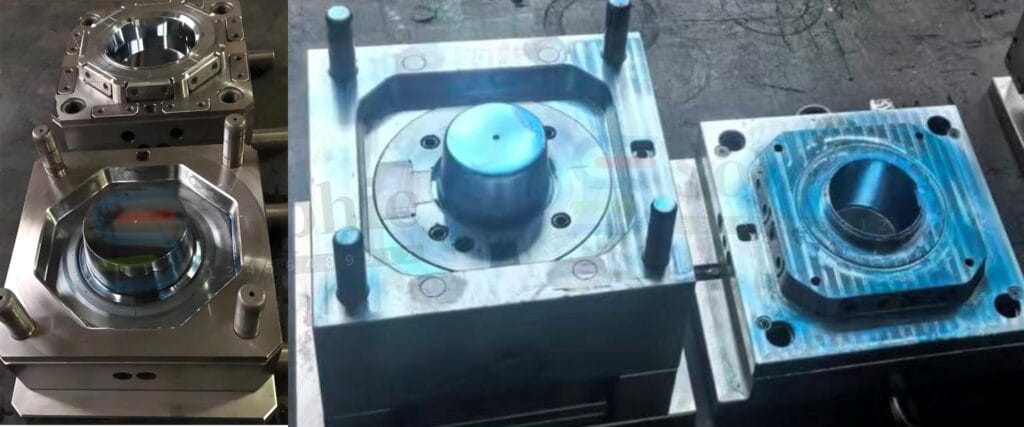
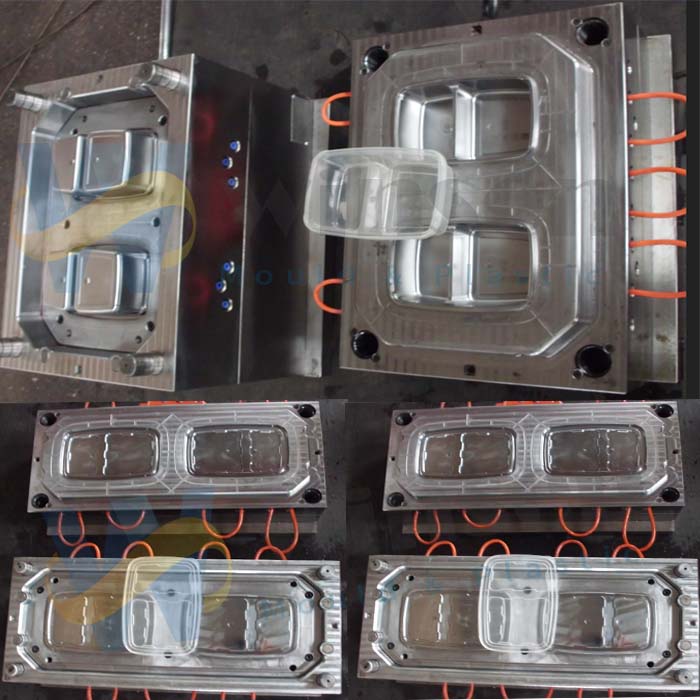
The global food delivery boom has transformed a humble container into a critical supply chain component. Thin wall lunch box mold technology now enables manufacturers to produce millions of disposable food containers daily—each weighing mere grams yet sturdy enough to protect meals across cities. This precision tooling represents the intersection of speed engineering, material science, and sustainability mandates reshaping the packaging industry.
Table of Contents
Toggle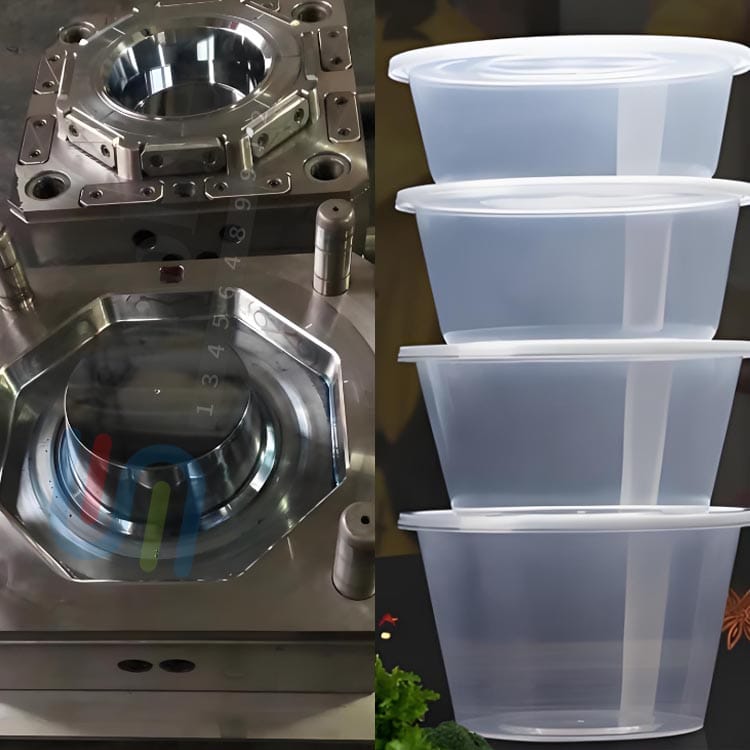
The Speed Revolution: From 7 Seconds to 6
In high-volume food packaging, one second determines market leadership. Thinwall lunch box mold systems paired with advanced injection machines have achieved production cycles as fast as 5.6-7.1 seconds—a dramatic improvement from standard 15-20 second cycles.
This acceleration delivers tangible business impact. G-BOX, a leading Chinese lunch box manufacturer, reduced cycle time from 7 seconds to 6 seconds using Chen Hsong SPEED PACK II machines. This one-second improvement enabled production of 8.5 additional 40HQ shipping containers monthly across 13 production lines—transforming operational economics and competitive positioning.
Material Engineering for Food Safety
High-Flow Grades: Standard PP lacks the flow length required for 0.4-0.8mm wall sections. Specialized high-flow PP grades from Borouge and ExxonMobil achieve melt flow indices exceeding 50 g/10min, enabling complete cavity filling at low injection pressures.
- Optimized gate placement preventing flow hesitation marks
- Precision cooling channel positioning (6-8mm from cavity surface)
- Beryllium copper inserts accelerating heat extraction in critical areas.
Mold Design for Mass Production Economics
| Specification | Configuration | Rationale |
|---|---|---|
| Cavitation | 4, 8, 16, or 32 cavities | Matches machine tonnage (260-430 tons) and output targets |
| Mold Steel | S136, H13, or 2344 | H13 achieves 3,000,000 shots; S136 handles abrasive bio-additives |
| Hot Runner | YUDO/Chinese brand, needle valve | Eliminates cold runner waste, ensures consistent part quality |
| Cooling | Conformal channels + beryllium copper | Reduces cycle time to 3-5 seconds for shallow containers |
| Ejection | Air blow + robotic arm | Prevents deformation of thin walls during demolding |
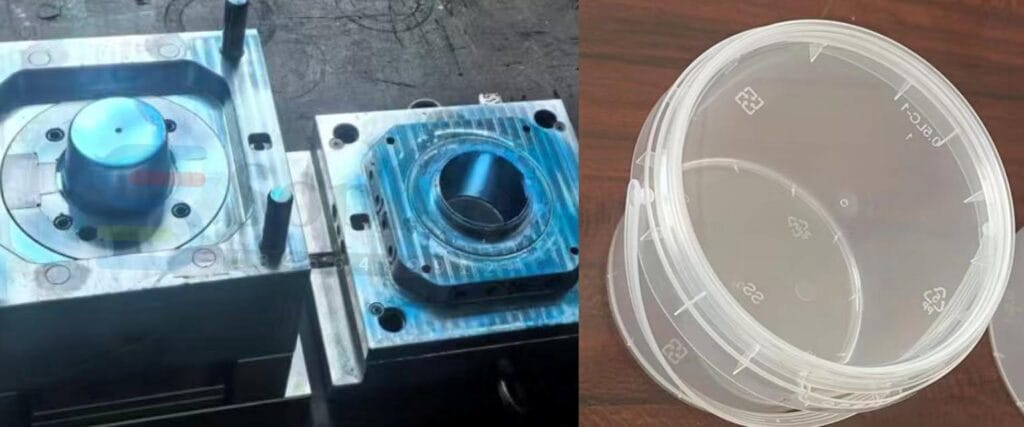
Automation and Industry 4.0 Integration
- Central feeding systems maintain material consistency across 24/7 operations
- Linear robotic arms extract containers in 0.3-second response times
- Vision inspection systems detect defects at production speeds
- Automatic stacking and packing prepare products for immediate shipment
Quality Standards and Certification
- Food-grade steel (S136 stainless) preventing corrosion and contamination
Cleanroom production environments eliminating particulate contamination.
- Leak-proof validation ensuring lid-to-container sealing under transport stress
The Sustainability Imperative
- Biodegradable PLA containers requiring modified cooling and lower processing temperatures (max 52°C)
- Lightweighting initiatives reducing material consumption 15-20% through wall thickness optimization
- Recyclable mono-material designs eliminating multi-layer complexity
Conclusion
The thin wall lunch box mold has evolved from commodity tooling to strategic technology enabling the global food delivery economy. By mastering sub-7-second cycle times, high-flow PP processing, and automated production integration, manufacturers can meet explosive demand while navigating sustainability transitions. As takeout culture expands and environmental standards tighten, investment in precision thin-wall molding technology separates market leaders from followers.
Ready to develop high-speed thin wall lunch box molds for your food packaging operation? Contact our engineering team for cycle time optimization, sustainable material integration, and automated production solutions tailored to your volume targets.