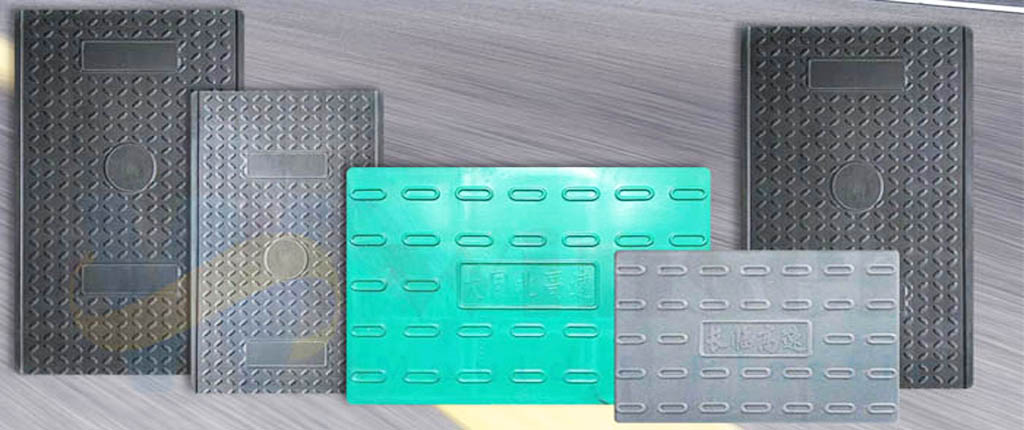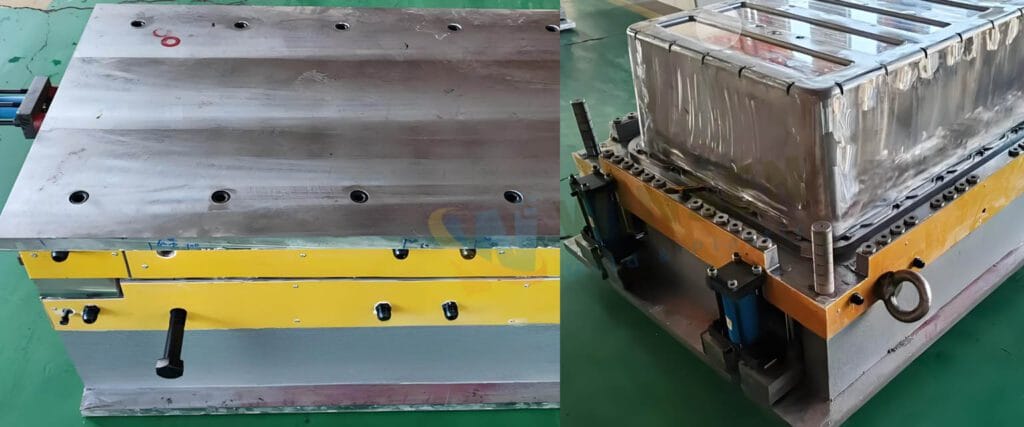
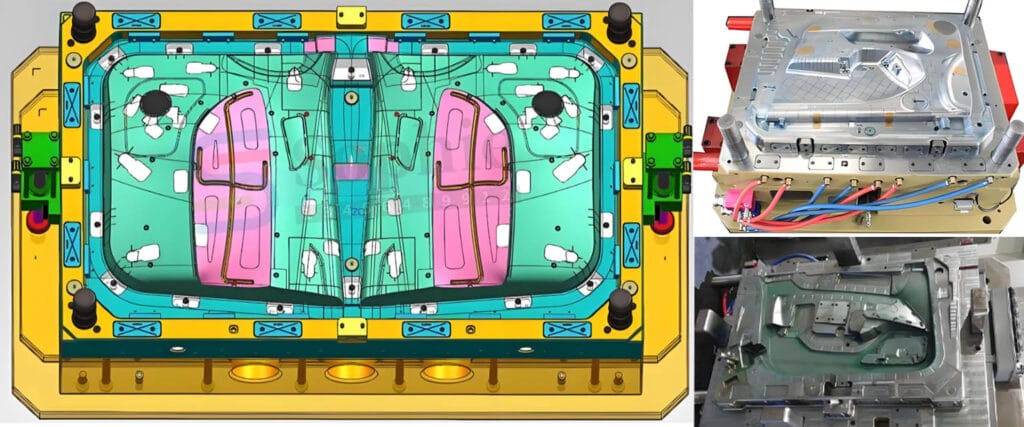
SMC Composite Mould: Engineering High-Performance FRP Components for Demanding Industries
Understanding SMC Material and Molding Dynamics
Sheet Molding Compound (SMC) represents an advanced class of fiber-reinforced thermoset materials. The compound consists of chopped glass fibers (typically 10-60% by weight) impregnated with unsaturated polyester or vinyl ester resin, thickened with fillers and catalysts, and sandwiched between protective carrier films.
Table of Contents
Toggle- Material preparation: SMC sheets cut to predetermined weights based on part geometry
- Charge placement: Positioned in heated mold cavities (140-160°C)
- Compression forming: Hydraulic presses apply 500-4,000 tons pressure depending on component size
- Chemical curing: Cross-linking reactions create irreversible molecular bonds, delivering exceptional thermal and chemical stability
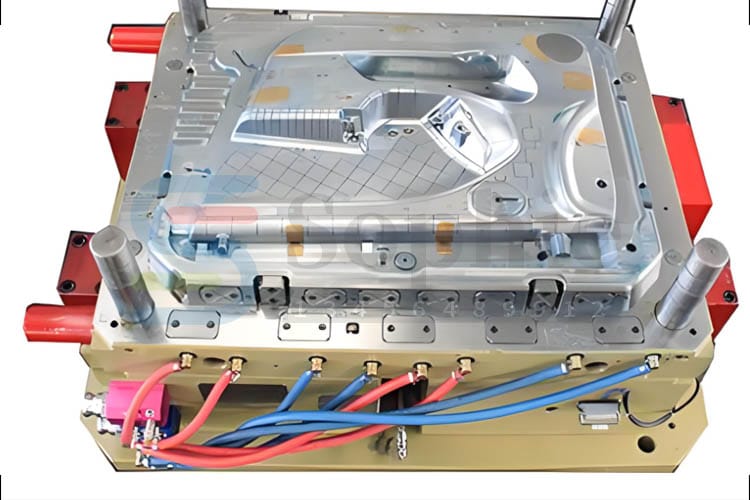
Thermal Management Systems
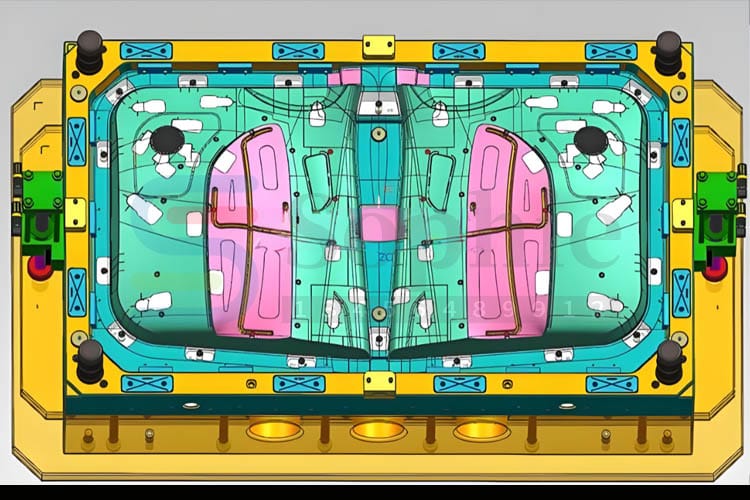
SMC composite mould engineering requires sophisticated heating systems maintaining uniform cavity temperatures. Oil circulation or cartridge heating systems ensure 140-160°C consistency across large surface areas, preventing cure variations that cause warpage or residual stress.
Beryllium copper inserts in high-heat-flux zones accelerate local heat transfer, reducing cycle times by 15-20%.
Pressure Distribution Engineering
SMC flows as a viscous mat during compression, requiring SMC composite mould designs that guide material into complex geometries without fiber washout or resin starvation. Strategic vent placement—positioned at last-fill locations—allows air escape while preventing material loss. Mold flow simulation validates fill patterns before steel cutting, eliminating costly trial-and-error iterations.
Surface Finish Specifications
| Application | Surface Requirement | Mold Treatment |
|---|---|---|
| Automotive Class A | High-gloss, paint-ready | Nickel-plated, polished to SPI-A2 |
| Structural industrial | Smooth, functional | Standard polish, P20 steel |
| Corrosion-resistant | Chemical barrier | Chrome plating, 25+ micron thickness |
Critical Mould Design Parameters
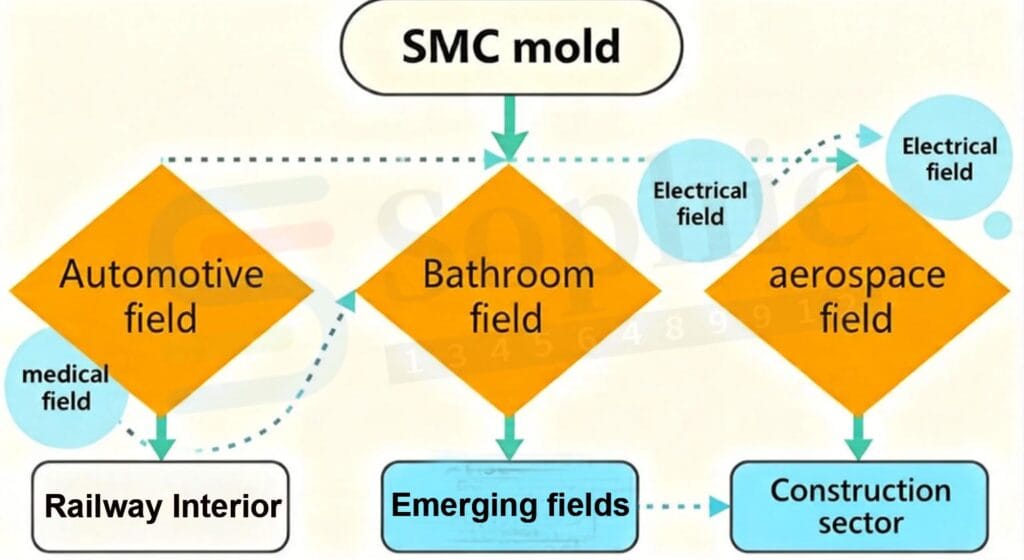
Industry-Specific Applications
Automotive Lightweighting
Railway Interior Systems
Aerospace Structural Components
Manufacturing Excellence Standards
- Steel selection: H13 (HRC 48-52) for high-volume production exceeding 500,000 shots; P20 for medium-volume, cost-sensitive applications
- Dimensional control: CMM verification ensuring ±0.1mm tolerances on critical mating surfaces
- Process validation: Statistical process control (SPC) monitoring cure times, pressure curves, and temperature uniformity
- Quality certification: ISO 9001 and automotive IATF 16949 compliance for supply chain integration
Economic Advantages and Sustainability
- Tooling longevity: 500,000+ component production from single mold set
- Energy efficiency: 40% lower processing energy versus aluminum die casting
- Design freedom: Complex geometries, integrated ribs, and functional features molded in single operations
- Lifecycle durability: 20+ year service life without corrosion maintenance
Conclusion
The SMC composite mould represents a critical enabling technology for industries transitioning from metals to fiber-reinforced composites. Success requires understanding both the chemical dynamics of thermoset curing and the mechanical demands of high-pressure compression molding. By investing in precision tooling, advanced thermal management, and rigorous quality systems, manufacturers can deliver SMC components that outperform traditional materials across strength, weight, and durability metrics.
Ready to develop precision SMC composite moulds for your automotive, railway, or industrial applications? Contact our engineering team for material selection guidance, DFM analysis, and custom compression tooling solutions tailored to your performance specifications.