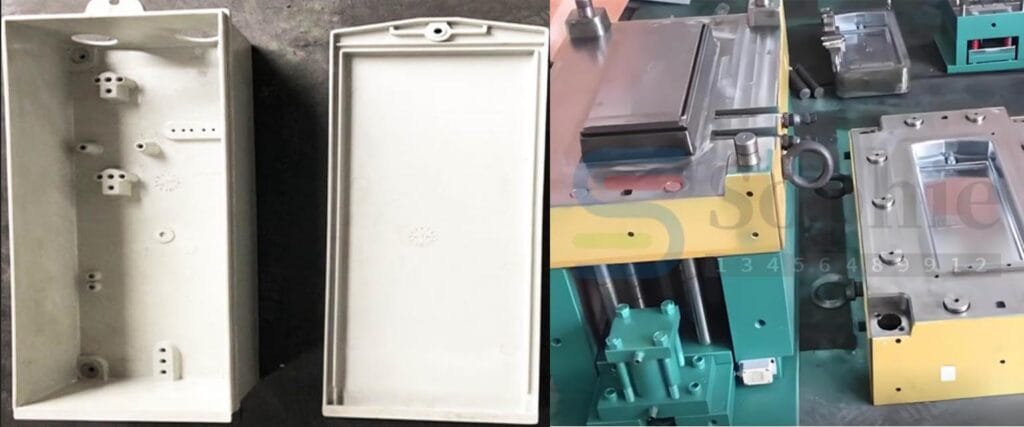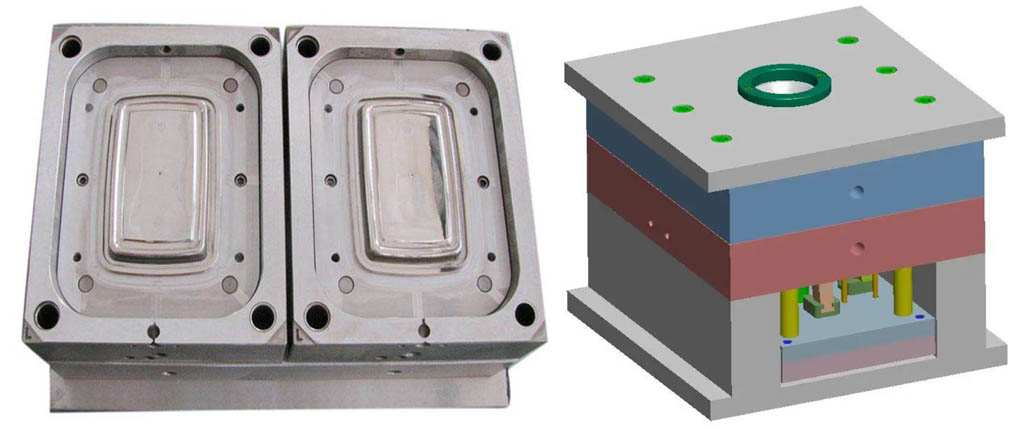
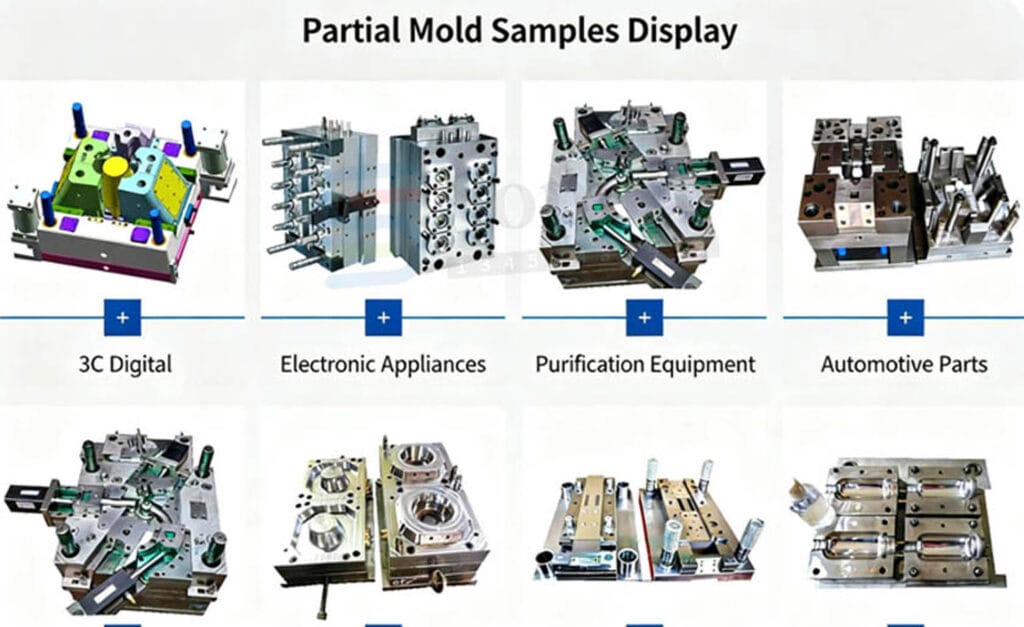
Plastic Injection Mould Manufacturing: From Prototype to Production
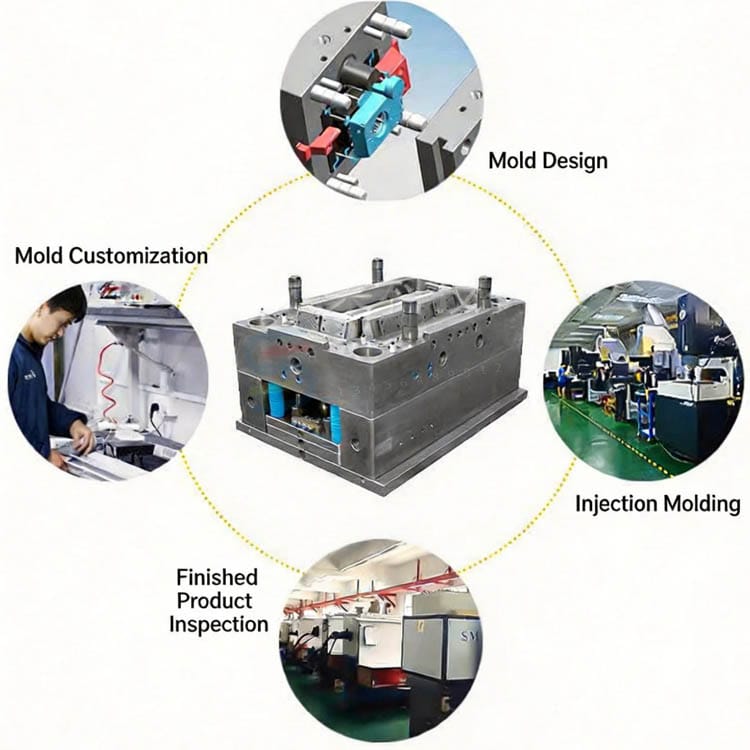
Bringing a plastic component from concept to market requires more than machining steel cavities—it demands a strategic manufacturing partnership capable of navigating every development phase. Plastic injection mould manufacturing for custom parts encompasses a comprehensive ecosystem: design validation, rapid prototyping, bridge tooling, and scalable production. Understanding this integrated workflow enables companies to reduce risk, accelerate timelines, and optimize total cost of ownership across product lifecycle
Table of Contents
Toggle
The DFM Foundation: Designing for Manufacturability
Successful plastic injection mold manufacturing begins before cutting steel. Design for Manufacturability (DFM) analysis transforms CAD concepts into production-ready specifications, identifying potential issues that would otherwise trigger costly mold modifications.
Wall Thickness Optimization: Uniform thickness (typically 1.5-4mm for structural parts, 0.4-0.8mm for thin-wall packaging) prevents sink marks, warping, and differential shrinkage. Variations exceeding 25% of nominal wall thickness create stress concentrations and dimensional instability.
Draft Angle Engineering: 1-2 degrees for smooth surfaces, 3-5 degrees for textured finishes ensures clean ejection without cosmetic damage. Undercuts requiring side-actions or lifters significantly increase tooling complexity and cost—DFM analysis evaluates whether design modifications can eliminate these features while preserving functionality.
Rapid Prototyping: Validating Before Investing
Plastic mould injection manufacturing traditionally required 12-16 week lead times for hardened steel tools—a prohibitive barrier for design validation. Modern rapid tooling approaches compress this to 1-3 weeks using aluminum or unhardened steel (P20 pre-hardened to HRC 28-32).
| Method | Material | Volume Range | Lead Time | Cost vs. Production Tool |
|---|---|---|---|---|
| Aluminum tooling | 7075 alloy | 500-10,000 shots | 1-2 weeks | 60-70% lower |
| Soft steel (P20) | Pre-hardened | 10,000-100,000 shots | 2-3 weeks | 40-50% lower |
| Hybrid inserts | Additive + steel | 1,000-5,000 shots | 3-5 days | 80-90% lower |
Bridge Tooling: The Production Continuity Strategy
- Low-volume launch: Aluminum or soft steel molds produce 5,000-50,000 units for early customer sampling and field testing
- Design stabilization: Performance data and user feedback inform final geometry adjustments
- Production tool construction: Hardened H13 steel molds (HRC 48-52) proceed in parallel, ready for seamless transition
- Volume scaling: Full production commences with validated designs, eliminating costly mid-production mold modifications
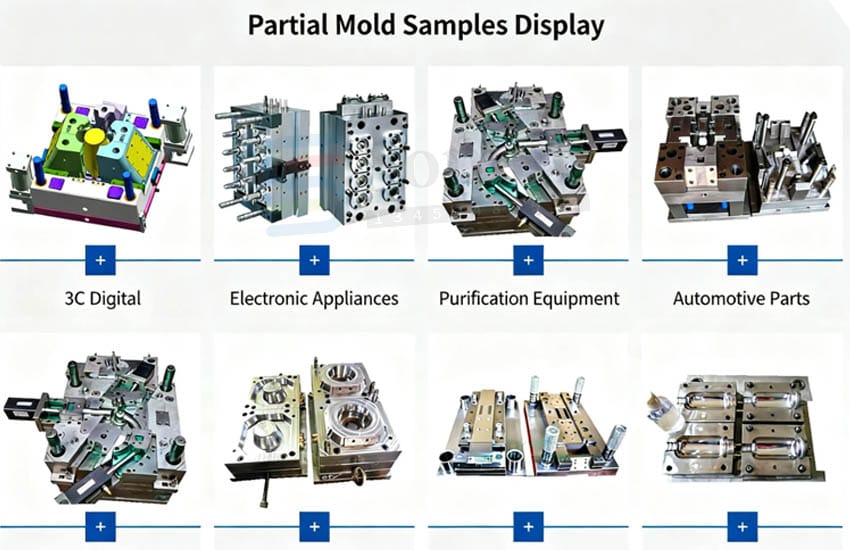
Production Plastic Injection Mould: Engineering for Million-Shot Durability
| Application | Steel Grade | Hardness | Expected Lifespan | Rationale |
|---|---|---|---|---|
| General industrial | H13 | HRC 48-52 | 1,000,000+ shots | Thermal fatigue resistance, abrasive fillers |
| Corrosive materials | S136/420SS | HRC 48-52 | 500,000+ shots | Stainless properties for PVC, recycled content |
| High-polish cosmetic | NAK80 | HRC 38-42 | 200,000-500,000 shots | Excellent polishability, pre-hardened |
| Cost-sensitive prototype | P20 | HRC 28-32 | 100,000 shots | No post-heat treatment, fast machining |
Process Optimization: From First Shot to Full Production
Moldflow Simulation: Digital validation of filling patterns, weld line positions, cooling efficiency, and warpage prediction occurs before physical prototyping. This reduces mold rework by 60-70%, compressing development timelines from 16 weeks to 10-12 weeks for complex geometries.
Scalability and Total Cost Optimization
- Concept phase: 3D printed prototypes for form/fit evaluation ($50-200/part, 2-3 day turnaround)
- Validation phase: Aluminum tooling for functional testing and regulatory submission ($3,000-8,000 tooling, 1-2 week delivery)
- Launch phase: Bridge tooling for market entry while refining designs ($8,000-25,000 tooling, 2-4 week delivery)
- Growth phase: Hardened steel production tools for million-unit volumes ($25,000-100,000+ tooling, 8-12 week delivery)