
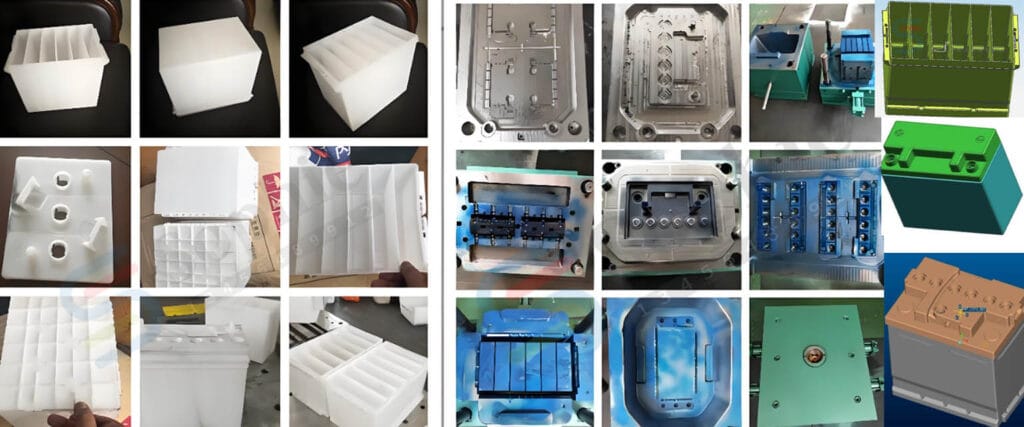
Battery Box Mould: Precision Engineering for Electric Vehicle & Automotive Batteries
The electrification of transportation and the expanding energy storage sector have created explosive demand for high-performance battery enclosures. Battery box mould technology sits at the intersection of material science, precision engineering, and mass production—enabling manufacturers to deliver containers that protect critical energy systems while withstanding extreme operational environments
Table of Contents
Toggle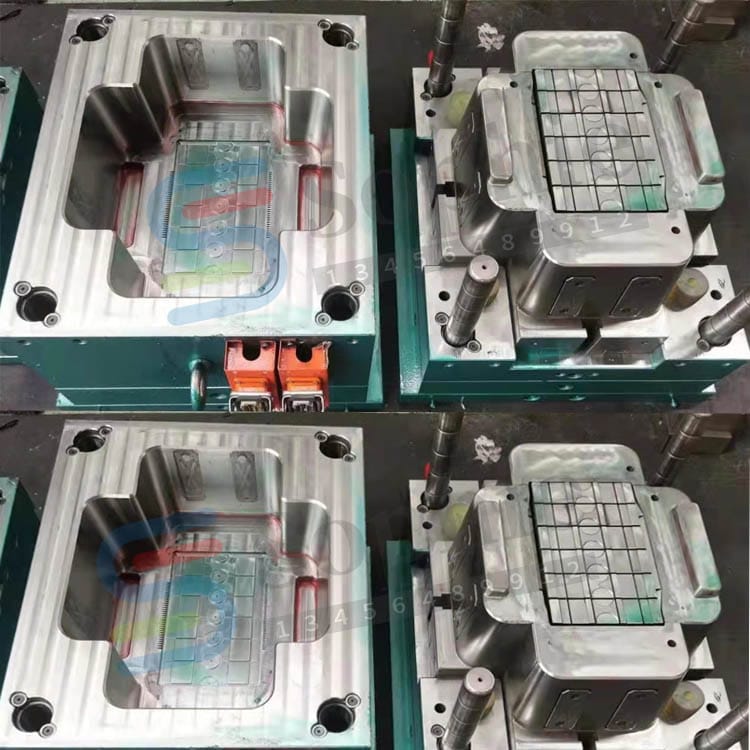
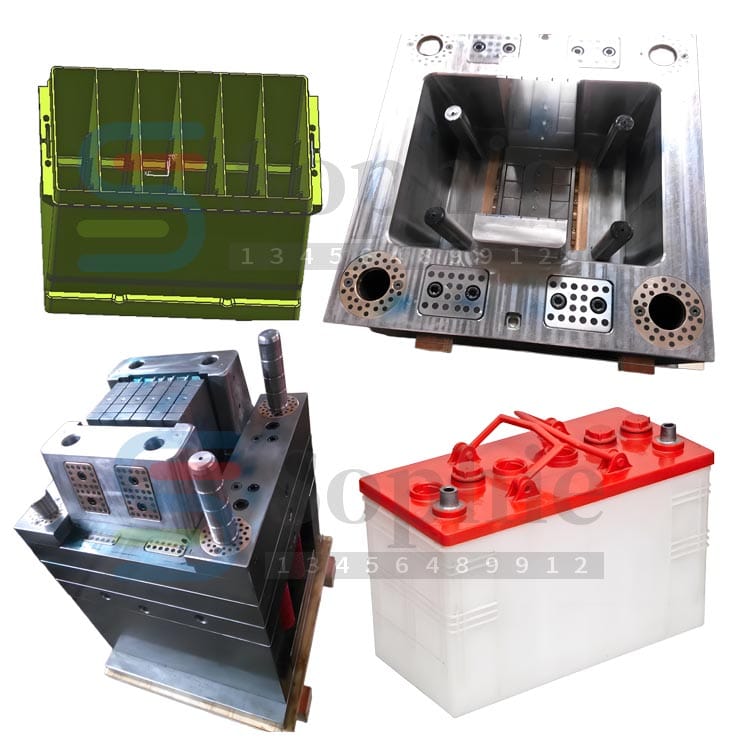
Battery Box Mould Technologies Overview
Plastic Injection Moulding dominates automotive battery container production, utilizing materials like PP, ABS, and FR-ABS (flame-retardant ABS).
This process delivers exceptional dimensional precision for lead-acid batteries, Li-ion modules, and UPS systems, with typical cycle times of 40-60 seconds and mould lifespans reaching 500,000 shots.
Critical Design Specifications
Material Selection Matrix (Battery Box Mold )
| Battery Type | Material | Process | Key Properties |
|---|---|---|---|
| Automotive lead-acid | PP/ABS | Injection molding | Chemical resistance, cost efficiency |
| EV high-voltage | SMC (PA6+D-LFT) | Compression molding | Thermal runaway protection, 160°C stability |
| UPS industrial | FR-ABS | Injection molding | Flame retardancy, insulation |
| Motorcycle/scooter | ABS+PC blend | Injection molding | Impact resistance, UV stability |
Mould Construction Standards
- Mould Steel: S136, DIN 1.2738, or H13 (HRC 48-52) for 500,000-1,000,000 shot durability
- Hot Runner Systems: 7-tip configurations for balanced injection, with variable gate diameters optimized through mold flow analysis
- Ejection Mechanisms: Stripper plate systems ensuring uniform part release without warping
- Thermal Management: Oil heating systems maintaining 140-180°C for thermoset curing, or precision cooling for thermoplastic cycles
Precision Requirements
- Dimensional Accuracy: ±0.01mm-±0.02mm tolerance for container-cover mating surfaces
- Sealing Integrity: Perfect dimensional control prevents acid leakage in lead-acid batteries and moisture ingress in EV packs
- Ventilation Design: Integrated air venting channels ensuring long-term operational safety
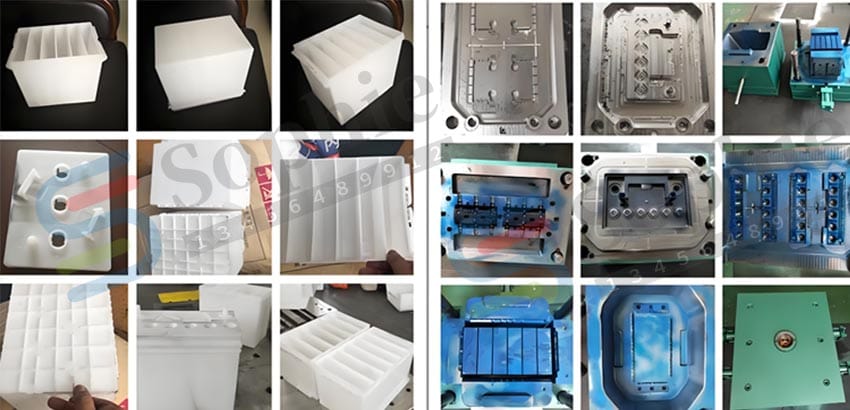
Manufacturing Process Optimization
EV-Specific Innovations
- Thermal Management Integration: Mould designs incorporating cooling channel geometries and thermal runaway protection features
- Structural Consolidation: Single-compression-molding-step enclosures replacing multi-piece metal assemblies, reducing suppliers and logistics complexity
- EMI Shielding: Molded-in conductive layers or mica sheet integration for electromagnetic protection
- Lightweight Optimization: Tepex thermoplastic composite sheet technology enabling weight savings over aluminum while maintaining crashworthiness
Quality Assurance & Standards Compliance
- ISO 9001/IATF 16949: Automotive quality management certification
- UL 94 Flame Rating: Vertical and horizontal burn testing for material validation
- Dielectric Testing: High-voltage insulation verification for EV applications
- Environmental Cycling: -40°C to +60°C thermal shock testing for outdoor-rated enclosures
Market Trends & Strategic Considerations
- Platform Mould Strategies: Single tooling configurations producing multiple battery sizes through interchangeable inserts
- Sustainable Materials: Recycled content integration and bio-based BMC formulations
- Smart Integration: Mould designs accommodating sensor mounting points and RFID tracking features
- Regional Manufacturing: Distributed moulding facilities reducing logistics costs for heavy battery enclosures
Conclusion
Investing in optimized battery box mould technology requires balancing material science, process engineering, and application-specific safety standards. Whether producing injection-molded containers for automotive lead-acid batteries or compression-molded enclosures for EV lithium-ion systems, manufacturers must prioritize thermal management, sealing integrity, and regulatory compliance. As electrification accelerates globally, mould makers delivering precision tooling for energy storage systems will capture expanding market opportunities across automotive, industrial, and consumer sectors.
Ready to develop precision battery box moulds for your EV or automotive production line? Contact our engineering team for material selection guidance, DFM analysis, and custom tooling solutions tailored to IEC, UL, and automotive industry standards.

