Custom SMC Fiberglass Flower Pot Mold Manufacturer: From Design to High-Volume Production
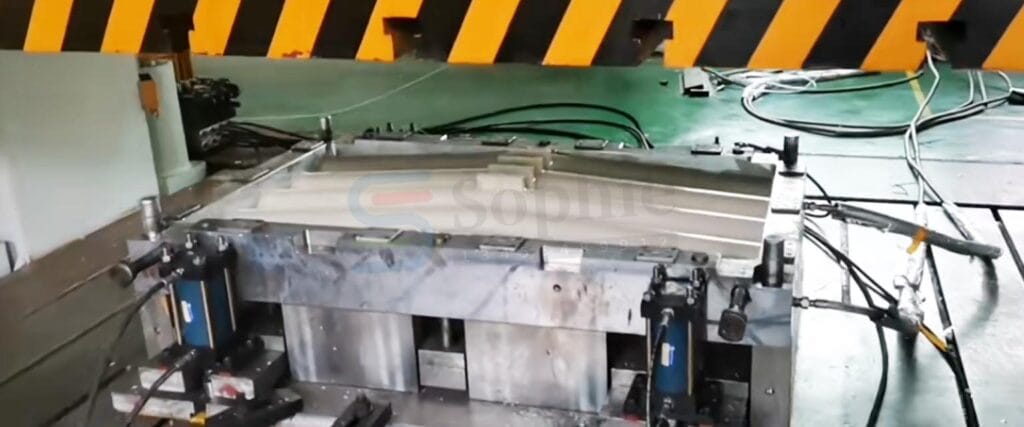
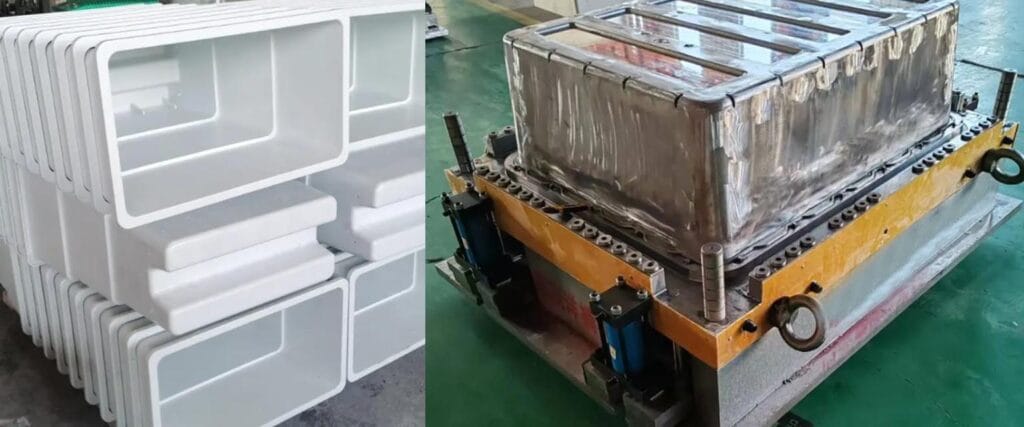
The global planter and landscaping industry has shifted decisively toward durable, lightweight composite solutions. As a specialized SMC fiberglass flower pot mold manufacturer, we bridge the gap between creative design and industrial-scale production, delivering compression-molded tooling that transforms sheet molding compound into premium planters built for decades of outdoor exposure.
Adhering to the principle of “pioneering innovation and sincere service”, the company always insists on taking product quality as the life of the enterprise and honesty and trustworthiness as the foundation of business. We will further standardize the enterprise management process and safeguard the traffic safety of all mankind.
Why SMC Molds Dominate Modern Planter Manufacturing
Sheet Molding Compound (SMC) represents a mature thermoset technology that outperforms traditional materials in nearly every metric relevant to commercial horticulture. Unlike rotational or blow-molded plastics, SMC compression molding produces planters with wall thicknesses up to 6–8 mm, delivering the structural rigidity needed for extra-large installations without the weight penalty of concrete or terracotta. The global SMC market reached approximately US$2.09 billion in 2025 and is projected to grow at a 3.9% CAGR through 2032, driven by demand across automotive, electrical, and building products sectors—including decorative landscape architecture.
For flower pot production specifically, SMC molds enable manufacturers to replicate complex surface textures—faux stone, wood grain, woven rattan, or smooth contemporary finishes—with Class-A surface quality straight from the press. This eliminates costly secondary finishing steps while ensuring batch-to-batch consistency that hand-laid fiberglass simply cannot match.
Our Mold Engineering Process
As a custom SMC fiberglass flower pot mold manufacturer, our workflow begins long before steel is cut. We collaborate with planter brands, landscape architects, and OEMs through four distinct phases:
1. DFM and Flow Simulation Every flower pot geometry presents unique molding challenges—deep draws, undercuts for rolled rims, integrated drainage channels, and textured sidewalls. We run mold-flow analysis on SMC charge patterns to predict fiber orientation, weld-line formation, and air entrapment risks. This digital validation prevents costly tooling revisions after the first trial shot.
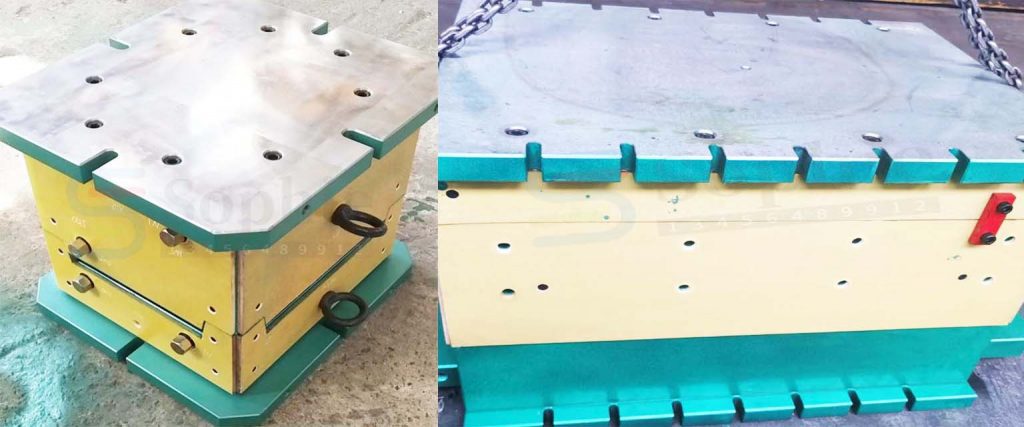
2. Tool Steel Selection and CNC Machining SMC molds endure clamping pressures from 500 to 1,500 tons and curing temperatures around 140–160°C. We typically specify P20 or H13 tool steel with through-hardened cavities for production runs exceeding 100,000 cycles. For prototype or short-run molds, aluminum-bronze alloys reduce lead times by 40% while maintaining acceptable dimensional stability.
3. Heating System Integration Uniform temperature distribution is non-negotiable in SMC molding. Our molds incorporate strategically placed cartridge heaters or oil channels with ±2°C zone control. This ensures complete cross-linking of the polyester or vinyl ester matrix, eliminating the soft spots or blistering that compromise planter durability in freeze-thaw cycles.
4. Surface Engineering and Texture Replication The mold surface itself becomes the finished product’s skin. We apply chrome plating for glossy modern finishes or chemically etch negative textures to replicate natural materials. For faux-concrete planters, micro-pitted surfaces created through EDM spark erosion produce remarkably authentic tactile results—without the 90+ lb weight of actual concrete vessels.
Technical Specifications That Define Quality
When sourcing an SMC fiberglass flower pot mold manufacturer, buyers should evaluate these critical parameters:
| Specification | Industry Standard | Our Capability |
|---|---|---|
| Mold Cavity Hardness | HRC 28–32 | HRC 30–34 with nitriding |
| Part Dimensional Tolerance | ±0.5% | ±0.3% on critical dimensions |
| Surface Roughness (Ra) | 0.8–1.6 μm | 0.4 μm for high-gloss finishes |
| Production Cycle Time | 3–5 minutes | 2.5–4 minutes with optimized heating |
| Mold Life Expectancy | 80,000–100,000 shots | 120,000+ shots with maintenance protocol |
These metrics matter because planter molds represent significant capital investment. A single large-format mold (36-inch diameter or greater) can require 8–12 weeks of fabrication time and substantial tooling budgets. Maximizing mold longevity through proper steel selection and cooling design directly impacts per-unit manufacturing economics.
Global Supply Chain Positioning
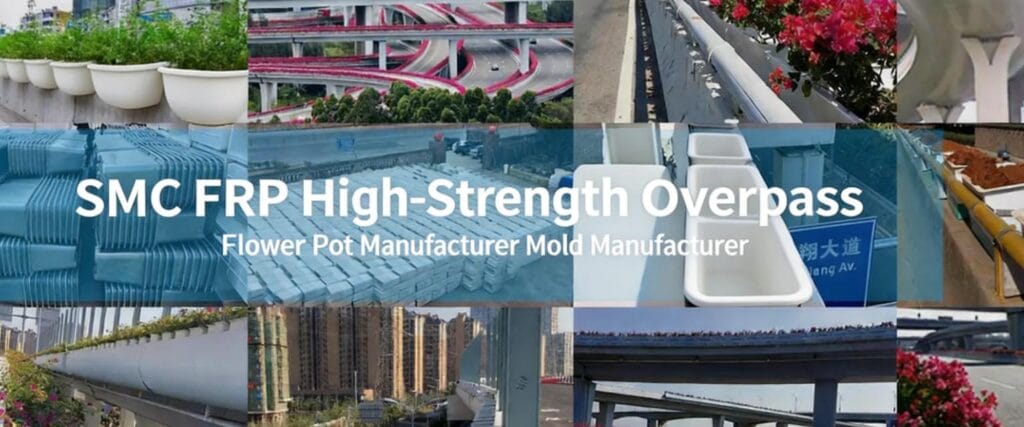
The Asia-Pacific region, particularly China, has emerged as the world’s largest mold production base and innovation center for composite tooling, supported by well-developed manufacturing ecosystems and cost advantages . However, successful SMC fiberglass flower pot mold manufacturing requires more than geographic proximity to machine shops.
We maintain direct relationships with SMC compound suppliers to validate material shrinkage rates specific to each resin formulation—critical because a mold designed for standard polyester SMC will produce out-of-spec parts if the customer switches to low-profile or vinyl ester grades. This upstream integration separates commodity mold brokers from true engineering partners.
Applications Beyond Standard Planters
While decorative flower pots remain our core market, the same SMC mold technology serves adjacent sectors:
- Commercial self-watering planters with integrated reservoir chambers
- Urban tree boxes requiring load-bearing capacity for pedestrian traffic
- Modular green-wall systems with interlocking geometric profiles
- Architectural grade planters meeting ASTM E-84 Class A flame spread requirements for commercial installations
Each application demands specific mold adaptations—core pulls for hollow sections, side-action mechanisms for interlocking tabs, or multi-cavity family molds that produce matching pot-and-saucer sets in a single press cycle.
Sustainability in Mold Design
Modern buyers increasingly scrutinize environmental impact across the supply chain. SMC molds support sustainability in two ways: first, by enabling the production of planters with 20+ year service lives (reducing replacement frequency versus cheaper alternatives), and second, through mold designs that minimize material waste. Optimized charge patterns and flash control reduce SMC scrap rates to under 5%, with trim waste often reprocessed into secondary applications.
Selecting the Right Manufacturing Partner
When evaluating an SMC fiberglass flower pot mold manufacturer, request these deliverables before committing to tooling production:
- Mold-flow simulation reports with predicted fiber orientation maps
- Steel certification and heat treatment documentation
- Sample parts produced from the actual production mold (not prototype tooling)
- Maintenance schedules and spare component lists
- Warranty terms covering dimensional drift over the mold lifecycle
A manufacturer unwilling to provide these fundamentals likely lacks the process control necessary for consistent high-volume production.
Conclusion
The transition from traditional planter materials to SMC composites is accelerating as commercial landscaping projects demand longer product lifecycles, lighter installation weights, and design flexibility. Partnering with an experienced SMC fiberglass flower pot mold manufacturer ensures that your product vision translates accurately into repeatable, cost-effective manufacturing reality.
Whether you require a single custom mold for a proprietary planter line or a multi-cavity production tool for global distribution, the engineering decisions made during mold design will define your product quality for years to come. Contact our engineering team to review your CAD files and receive a detailed DFM analysis tailored to your specific SMC material selection and production volume targets.
FAQ Additions
- What is the typical lead time for a custom SMC flower pot mold? (8–12 weeks for steel tooling;)
- Can SMC molds replicate real stone or wood textures? (Yes, through chemical etching or EDM texturing on mold surfaces)
- What press tonnage is required for large planter molds? (Typically 800–1,500 tons depending on projected area and part depth)