
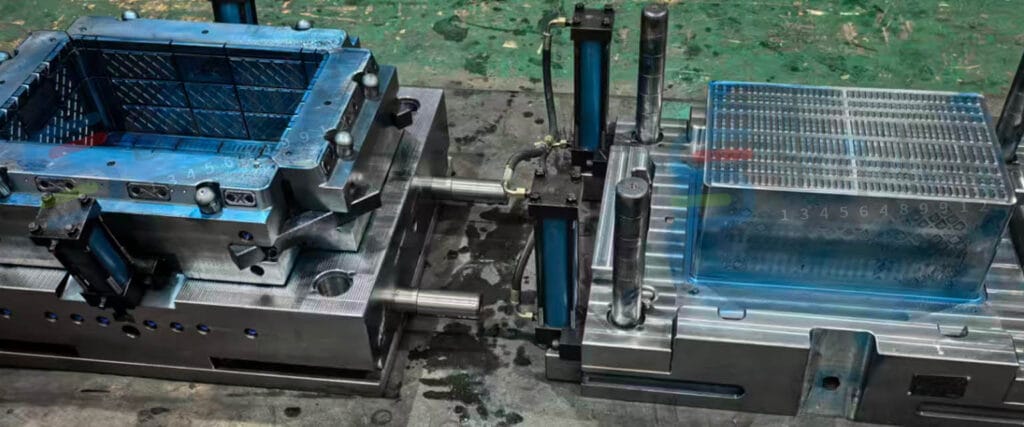
Plastic Crate Injection Mold: Engineering Solutions for High-Volume Production

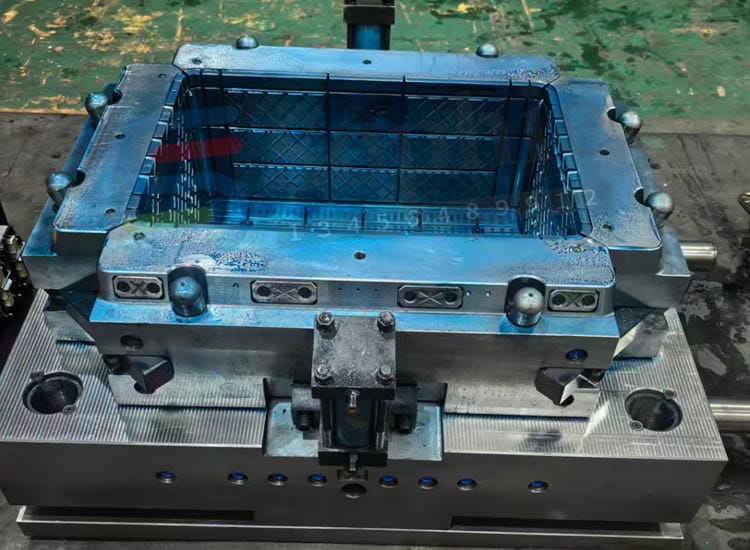
What Is a Plastic Crate Injection Mold?
Key Design Considerations for Optimal Performance
1. Cooling System Efficiency
Cooling time accounts for approximately 50% of the typical injection molding cycle. An optimized cooling system with conformal cooling channels can reduce cycle times by 20-30% compared to conventional designs . For high-efficiency crate production, molds should incorporate strategically placed cooling lines and, where possible, beryllium copper inserts to accelerate heat dissipation
Table of Contents
Toggle2. Material Flow and Gate Design
Proper gate and runner design ensures uniform plastic flow, minimizing defects like weld lines and sink marks. Mold flow analysis software allows engineers to simulate injection processes before physical prototyping, identifying potential short shots or air traps early in the design phase . This digital validation approach significantly reduces costly mold revisions later.
3. Ejection System and Draft Angles
Automatic ejection systems with increased draft angles (typically 2-5 degrees) ensure smooth part release without distortion . Given the complex rib structures common in plastic crates, mechanical ejection systems must be precisely engineered to prevent damage during demolding .
Mold Steel Selection: Balancing Cost and Longevity
| Steel Grade | Characteristics | Best For |
|---|---|---|
| P20 | Good machinability, moderate wear resistance | Low-volume production, prototyping |
| 718# | Enhanced polishability, corrosion resistance | Medium-volume runs, aesthetic parts |
| H13 | High thermal fatigue resistance, extreme durability | High-volume production, complex geometries |
For large-scale crate manufacturing requiring millions of cycles, H13 steel is the industry standard due to its ability to withstand high pressure and temperature fluctuations near injection gates
Machine Specifications for Crate Production
- Small crates (280×340×110mm): 350-ton machines
- Standard industrial crates: 380T–650T range
- Large folding/ventilated crates: Up to 1250-ton clamping force
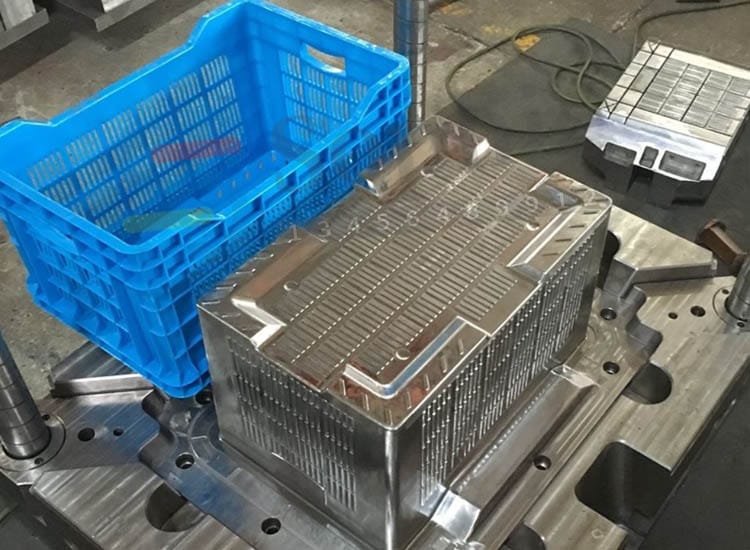
Emerging Trends: Sustainability and Additive Manufacturing
Quality Validation Process
- T1 Sampling: Initial test shots to evaluate dimensional accuracy and surface quality
- Dimensional corrections: Fine-tuning via machining or shimming
- Process validation: PPAP (Production Part Approval Process) for regulated industries, Cpk studies for process stability
Conclusion
Investing in a well-designed plastic crate injection mold requires balancing upfront tooling costs against long-term production efficiency. By prioritizing cooling optimization, selecting appropriate steel grades, and leveraging mold flow simulation, manufacturers can achieve cycle times under 20 seconds while maintaining consistent part quality. As the industry evolves toward sustainable materials and smart manufacturing, partnering with experienced mold designers who understand both traditional machining and additive innovations will determine competitive advantage.
Ready to optimize your plastic crate production? Contact our engineering team for custom mold design consultation and discover how advanced tooling solutions can reduce your cost-per-part while maximizing throughput.

