Plastic Injection Rail Mold & Shroud Mold: Helmet Manufacturing Guide
Understanding Rail Mold & Shroud Mold Functions
Critical Design Considerations
Material Selection for Combat Durability
- ABS resin: Impact-resistant, cost-effective, suitable for training helmets
- Polycarbonate (PC): Superior ballistic transparency, UV stability, ideal for visor-integrated systems
- PC/ABS blends: Balanced properties for high-performance tactical applications
Precision Tolerance Requirements
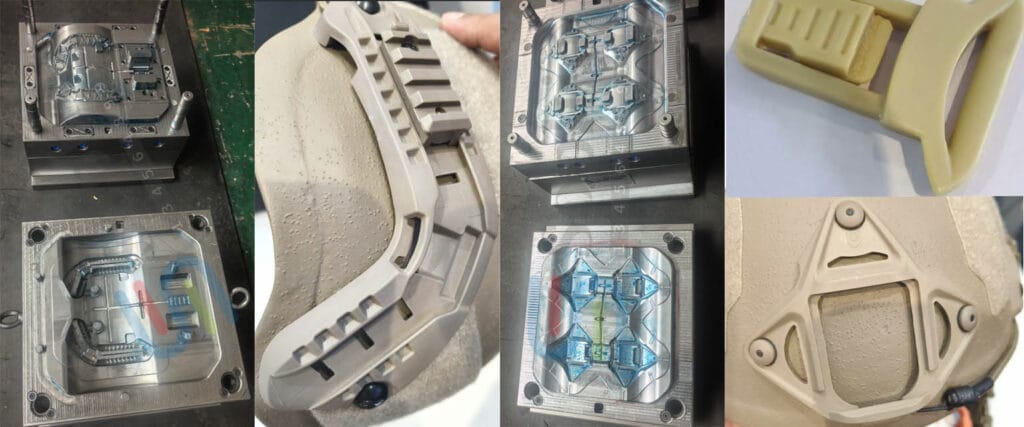
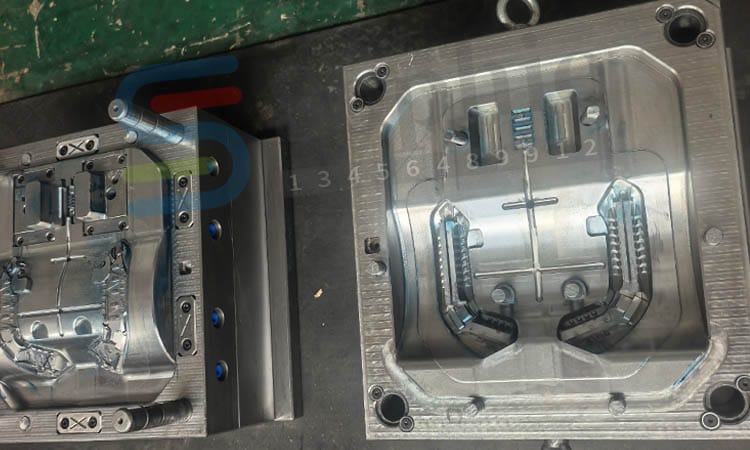
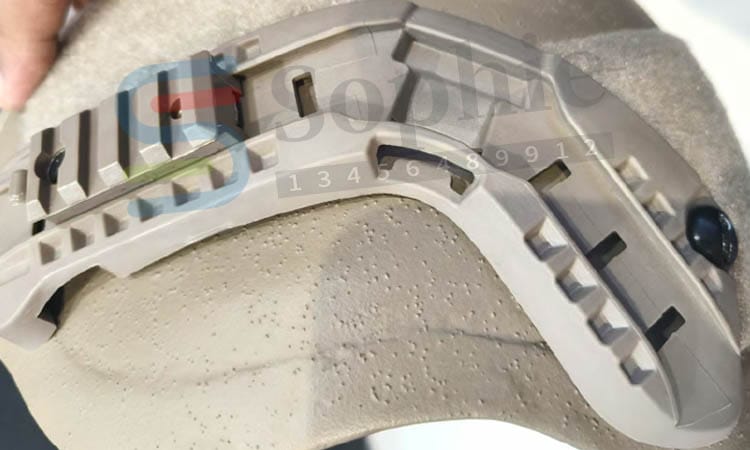
Tactical accessory rails must meet MIL-STD-1913 or comparable commercial specifications for rail dimensions. Injection molds for these components require tooling tolerances of ±0.1mm to ensure interoperability with third-party accessories
Table of Contents
Toggle. This precision demands high-grade mold steels like S136 or H718, which offer excellent polishability and dimensional stability under thermal cycling
Cooling System Optimization
Given the complex geometries of rail systems—including undercuts for accessory retention and hollow channels for weight reduction—conformal cooling becomes essential. Beryllium-bronze inserts strategically placed in core areas accelerate heat dissipation, reducing cycle times from industry averages of 120 seconds to optimized rates of 90 seconds or less
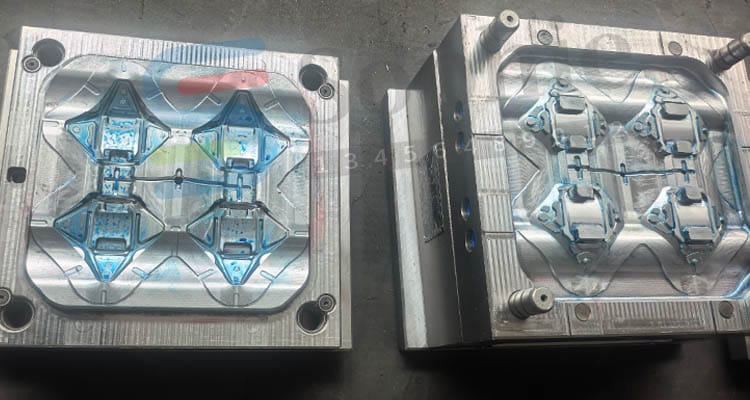
Mold Construction Specifications
| Component | Specification | Purpose |
|---|---|---|
| Mold Steel | S136, H718, 2738 | Corrosion resistance, high polishability |
| Cavity Arrangement | Single or 2-cavity | Balance production volume with precision |
| Hot Runner System | YUDO/Mold Master 1-tip | Consistent material flow, reduced waste |
| Gate Type | Needle valve gate | Clean parting lines on visible surfaces |
| Ejection System | Ejection plate + pins | Prevents distortion of thin-wall features |
| Cycle Time | 90-120 seconds | Depends on part thickness and cooling efficiency |
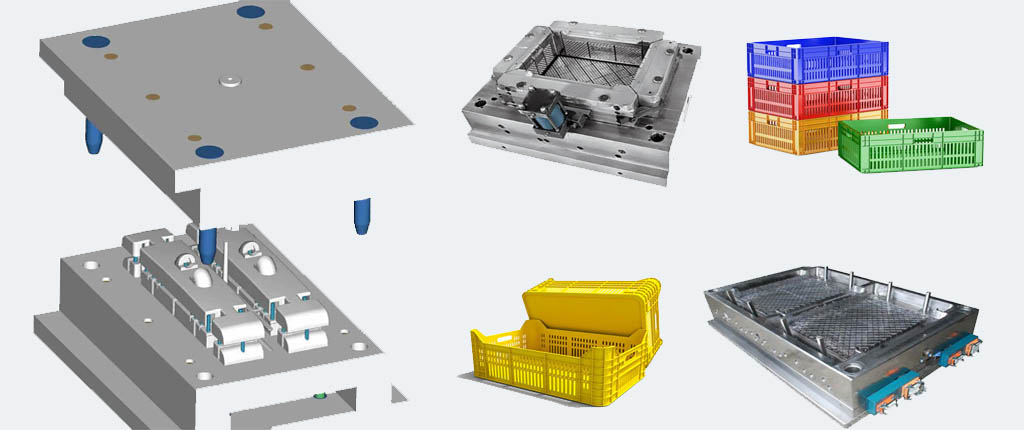
For large-scale crate manufacturing requiring millions of cycles, H13 steel is the industry standard due to its ability to withstand high pressure and temperature fluctuations near injection gates
Advanced Features: Integration & Multi-Component Molding
- Metal insert molding: Pre-fabricated aluminum mounting nuts embedded during injection, eliminating secondary assembly operations
- Overmolding capabilities: Soft-touch TPE layers molded over rigid substrates for improved grip and user comfort
- Living hinge designs: Integrated flexible joints in shroud systems for adjustable positioning without separate hardware
Quality Validation for Safety-Critical Applications
- Dimensional CMM verification: Ensuring mounting interface geometries meet specification tolerances
- Torque testing: Validating that molded threads and retention features withstand specified loads without stripping
- Environmental cycling: Testing molded components across temperature extremes (-40°C to +60°C) to verify material stability
- Ballistic integration testing: Confirming that rail/shroud attachment does not compromise helmet shell integrity
Production Efficiency & Cost Optimization
Conclusion
The plastic injection rail mold and shroud mold represent specialized tooling categories where military precision meets mass production economics. Success in this market requires understanding both the technical specifications of tactical accessory systems and the advanced molding techniques needed to produce them consistently. By investing in high-grade mold steels, optimized cooling systems, and rigorous quality protocols, manufacturers can deliver components that perform reliably in the most demanding operational environments.